
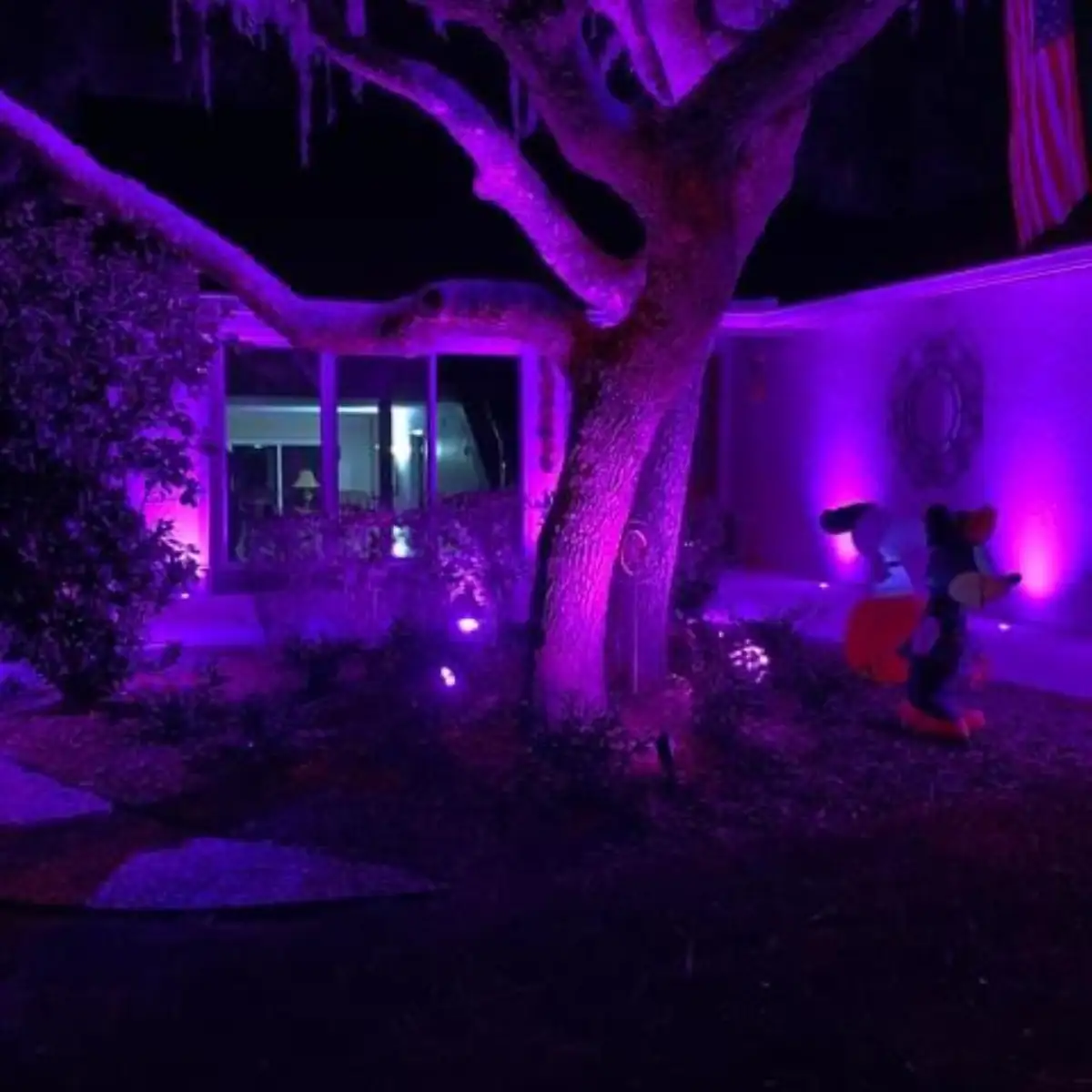
Most Milton homeowners start looking into landscape lighting because one part of the property feels unfinished or difficult to use after sunset. The driveway may be hard to see from the street, the walkway may need safer footing, the front entry may feel too dark for guests, or a patio may lose its usefulness once the sun drops. A good lighting plan solves those everyday problems while making the home look more complete at night.
Way's Lawn and Landscape LLC installs low-voltage landscape lighting for Milton, Pensacola and nearby Northwest Florida communities. The best system is not based on a generic fixture count. It is based on how the property is used, where people walk, where water moves, where power can be accessed and whether the lighting needs to work with future landscaping, paver patio or outdoor living improvements.
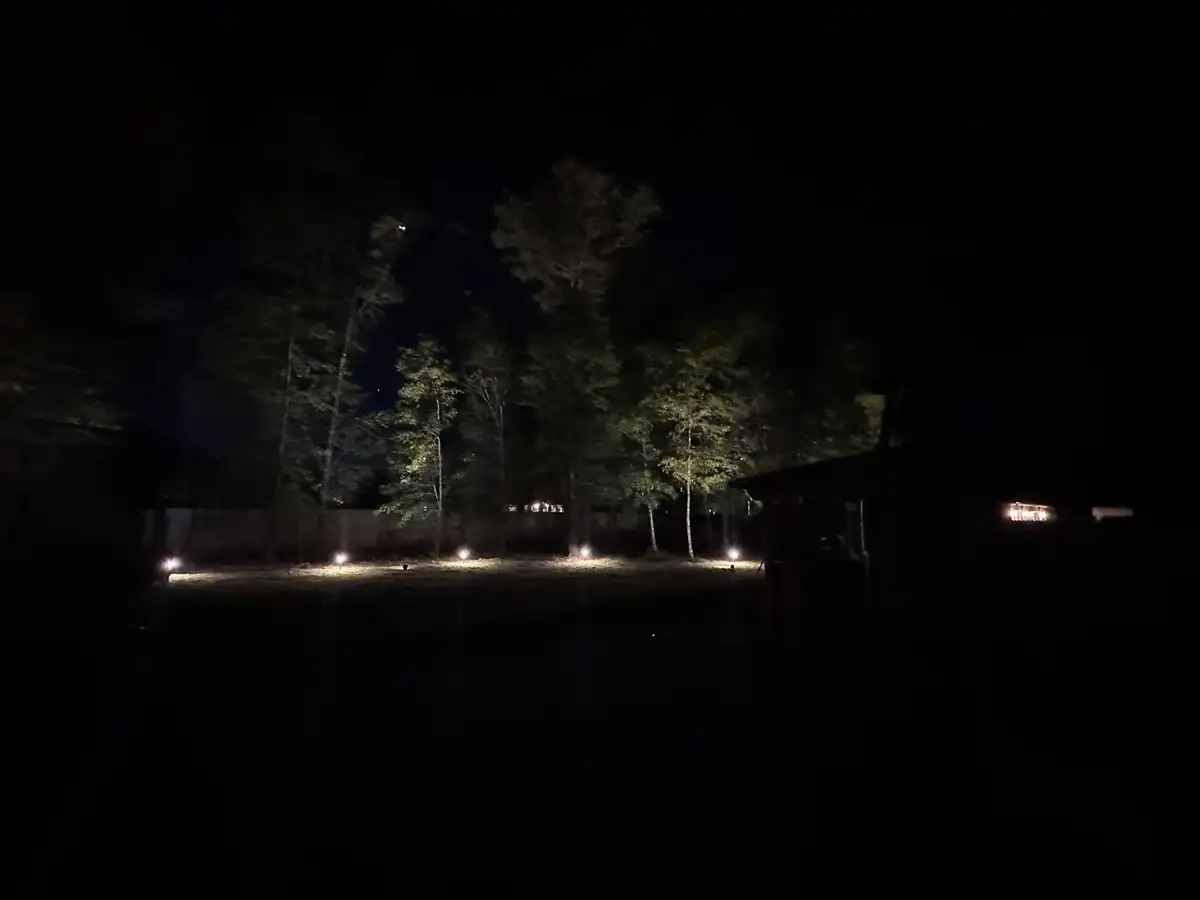
Which areas should get lighting first?
Start with the places that affect safety and daily use. For many Milton homes, that means the front walk, entry steps, driveway edges, side gate, patio steps and the route guests use when parking away from the front door. These areas should be visible without creating glare toward windows, neighbors or drivers.
After the high-use areas are covered, accent lighting can add depth to palms, live oaks, retaining edges, garden beds and architectural features. That balance matters. A yard with only decorative uplights may still be hard to walk through, while a yard with only path lights can feel flat. The strongest layout combines safer movement with a warmer evening look.
How many fixtures will a Milton lighting project need?
Fixture count depends on the size of the property, the distance from power, the number of zones, the shape of the beds, tree placement, grade changes and the areas that need visibility. A small entry project may only need a focused group of path lights and uplights. A larger yard may need separate driveway, front entry, side-yard and backyard zones.
The better question is what each fixture needs to accomplish. A path light should guide movement without shining into the eyes. An uplight should highlight a tree, column or wall without washing out the home. Patio lighting should help people use the space without overpowering seating areas. During a site visit, those decisions can be made with the actual yard in view.
Can lighting be added to an existing yard?
Yes. Low-voltage lighting can often be added to existing lawns, planting beds, walkways and paver areas. The installer should review sprinkler heads, valve boxes, drainage paths, roots, mower routes, bed edges and hardscape before placing wire or fixtures. That inspection helps limit yard disturbance and keeps the system easier to maintain.
Milton properties can vary widely, from compact neighborhood lots to larger Santa Rosa County yards with long side runs and darker areas between structures. If irrigation, drainage work, landscaping or paver patios are planned, mention that before lighting is installed. Coordinating the work can protect wire paths and reduce the chance that a new system has to be moved later.
What controls are best for outdoor lighting?
Most homeowners want the lighting to run automatically. Astronomical timers are a strong option because they adjust to sunset and sunrise through the year. Photocells can also work when they are placed where other lights will not confuse them. Smart controls may be useful for larger properties, separate zones or homeowners who want phone control.
Controls should be discussed with transformer size and future expansion. If the first phase covers the entry and front beds, but the backyard patio or pergola may be added later, planning capacity early can make the next phase cleaner. This is especially helpful when a lighting project may eventually connect to outdoor living work.
How do rain, irrigation and sandy soil affect lighting?
Northwest Florida lighting systems need to be planned around water and soil conditions. Heavy rain, irrigation overspray, low areas, downspout discharge and soft soil can shorten fixture life or make service harder when they are ignored. Connections should not sit in areas that stay wet after storms, and fixtures should be placed where sprinkler spray will not constantly hit lenses and housings.
Sandy soil can make some routing easier, but it also means drainage patterns can shift around beds, paver edges and slopes. If the property has standing water, washout, soft areas or erosion, drainage may need attention before lighting wire is routed through the same zone. A lighting estimate should account for those conditions instead of treating the yard like a flat blank surface.
What should be covered during the estimate?
A clear estimate should identify the areas being lit, the fixture types recommended, likely transformer placement, control options, wire routing and any site conditions that affect installation. It should also cover irrigation conflicts, wet areas, tree roots, hardscape edges, access limits and whether a future patio, planting bed or outdoor kitchen may change the best route.
Way's Lawn and Landscape LLC plans landscape lighting for homes in Milton and nearby communities, including Pensacola. When you request an estimate, share the areas you want to use after dark, any irrigation or drainage concerns and future patio or planting plans that could affect the layout.
Ready to plan lighting for your Milton property?
Way's Lawn and Landscape LLC installs low-voltage lighting for entries, walkways, patios, trees, driveways and outdoor living areas across Milton and nearby Northwest Florida communities.
Request a Free EstimateFrequently Asked Questions
What should Milton homeowners ask before booking landscape lighting?
Ask which areas will be lit first, where the transformer can be placed, how wire routes will avoid irrigation and drainage conflicts, what fixture types are recommended, what controls will run the system and whether future patios or landscape phases should be planned now.
Can landscape lighting be added to an existing Milton landscape?
Yes. Low-voltage landscape lighting can often be added to existing lawns, planting beds, walkways, paver areas and outdoor living areas after a site visit confirms power access, wire routing, irrigation locations, wet areas and fixture placement.
How does irrigation affect outdoor lighting?
Irrigation affects fixture placement, wire routes and connection locations. Sprinkler heads, valve boxes, drip lines and spray patterns should be reviewed so fixtures are not constantly soaked and buried wiring remains easier to service.
Do you serve areas near Milton for landscape lighting?
Yes. Way's Lawn and Landscape LLC serves Milton, Pensacola, Pace, Gulf Breeze, Navarre and other communities across Northwest Florida and the Alabama Gulf Coast.