Why Erosion Hits Harder in Northwest Florida
The Florida Panhandle receives an average of 65 inches of rainfall annually, with summer thunderstorms routinely dumping 2 to 4 inches in under an hour. When that volume of water hits sandy soil on any kind of slope, the results are predictable: topsoil washes away, landscape beds collapse, and exposed root systems kill plants that took years to establish.
Coastal properties face a compounding factor. Salt spray and wind from the Gulf of Mexico weaken vegetative ground cover, making it easier for rainwater to cut channels through exposed soil. Properties along Pensacola Bay, Santa Rosa Sound, and the Intracoastal Waterway lose measurable ground every hurricane season when storm surge and wave action strip away unprotected shoreline.
Erosion is not a cosmetic issue. Left unchecked, it undermines retaining walls, destabilizes foundations, exposes utility lines, and creates stormwater runoff that violates Northwest Florida Water Management District regulations. Addressing erosion early costs a fraction of repairing the structural damage it eventually causes.
Rip Rap & Rock Erosion Barriers
Rip rap is the most effective permanent solution for high-energy erosion sites — waterfront properties, steep drainage channels, and areas where concentrated runoff has carved deep channels. We place graded limestone or granite boulders along vulnerable banks and slopes, sized to resist the specific flow velocity and wave energy at each site.
For residential waterfront properties on Pensacola Bay and Santa Rosa Sound, rip rap costs approximately $35 to $60 per linear foot depending on the height and depth of coverage needed. Commercial sites and properties with severe shoreline retreat may require engineered rip rap with geotextile underlayment, which runs $50 to $85 per linear foot.
We source stone locally from Northwest Florida quarries to keep costs down and match the natural color palette of the Gulf Coast landscape. Every rip rap installation includes a geotextile fabric layer that prevents fine sand from migrating through the rock voids while allowing water to drain freely — a critical detail in Florida's high-water-table environment.
Slope Stabilization & Regrading
Not every erosion problem requires rock or heavy equipment. Many residential properties in Milton, Pace, and inland Pensacola neighborhoods have gradual slopes that erode during heavy rain simply because the surface lacks adequate ground cover or the grade directs water into concentrated channels instead of allowing it to sheet-flow across a broad area.
We correct these conditions by regrading the slope to reduce steepness where possible, installing erosion control blankets or coir logs to slow water velocity, and establishing permanent vegetative cover using deep-rooted native grasses and ground covers. Bahia grass, centipede, and shore juniper all perform well on Gulf Coast slopes because their root systems penetrate 12 to 18 inches into sandy soil — far deeper than standard St. Augustine turf.
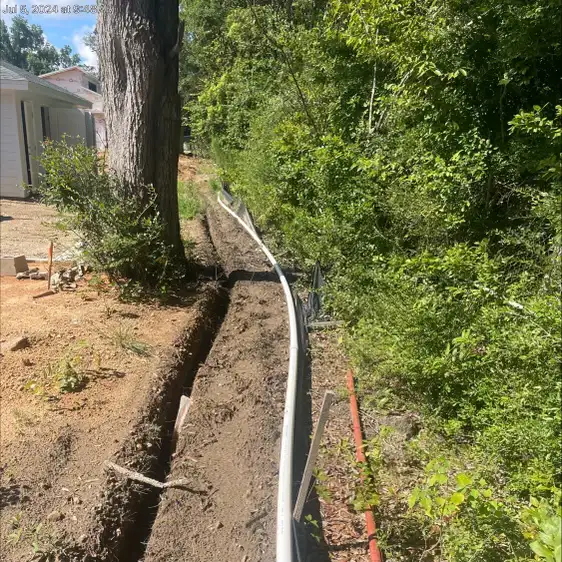
For steeper slopes where regrading is not practical, we build terraced retaining wall systems that break the slope into manageable sections. Each terrace includes a French drain behind the wall to manage hydrostatic pressure and prevent blowouts during heavy rain events. This combination of structural and vegetative erosion control creates a permanent solution that improves the property's appearance while eliminating ongoing soil loss.
Native Plantings & Vegetative Barriers
The most cost-effective long-term erosion control strategy for the Gulf Coast uses plants as the primary stabilization method. Root systems hold soil in place, foliage reduces raindrop impact energy, and established plant canopies slow surface runoff velocity — all without ongoing maintenance costs.
We select species based on the specific conditions at each site. Waterfront properties get salt-tolerant natives like smooth cordgrass, sea oats, and wax myrtle that thrive in brackish conditions. Inland slopes receive muhly grass, railroad vine, and mimosa strigillosa — native ground covers that spread aggressively and root deeply in sandy soil.
Vegetative erosion control costs approximately $3 to $8 per square foot installed, depending on plant density and species. Most sites need 3 to 6 months for full establishment, during which we protect the plantings with biodegradable erosion control blankets that hold the soil until root systems take over. This approach is particularly effective on large properties where the cost of rock or structural solutions would be prohibitive.
Which Erosion Control Method Fits Your Property?
The right approach depends on slope severity, water energy, and whether the erosion source is rainfall, runoff, wave action, or a combination. Most Gulf Coast properties benefit from layered solutions.
| Method | Best For | Approximate Cost | Longevity |
|---|---|---|---|
| Rip Rap | Waterfront, high-energy flow channels, severe slopes | $35 - $85 per linear ft | 50+ years |
| Retaining Wall Terraces | Steep residential slopes, grade transitions | $40 - $80 per sq ft | 30 - 50 years |
| Regrading | Moderate slopes, yard drainage correction | $1,500 - $4,000 | Permanent if maintained |
| Native Plantings | Large areas, moderate slopes, shoreline buffers | $3 - $8 per sq ft | Permanent once established |
| Erosion Control Blankets | Temporary stabilization, seed establishment | $1 - $3 per sq ft | 6 - 24 months (biodegradable) |
| Silt Fencing | Construction sites, temporary sediment containment | $3 - $6 per linear ft | 6 - 12 months |
Related Services
Drainage Solutions
French drains, catch basins, and water management systems that work alongside erosion control to protect your property from both surface and subsurface water.
Learn More →Retaining Walls
Structural walls that hold slopes, create terraces, and provide permanent grade transitions on erosion-prone properties throughout the Gulf Coast.
Learn More →Sod Installation
New turf installation with proper soil prep and grading. Sod provides immediate ground cover that stops erosion while establishing permanent root systems.
Learn More →Erosion Control FAQ
Visible signs include exposed tree roots, channels or ruts forming after rain, soil deposits at the base of slopes, mulch washing out of landscape beds, and bare soil patches that refuse to grow grass. On waterfront properties, look for receding banks, undermined bulkheads, or soil pulling away from seawalls. If you see any of these, the erosion is already advanced enough to warrant a professional assessment.
Standard residential erosion control — regrading, plantings, French drains, and rip rap on upland slopes — typically does not require permits in Escambia, Santa Rosa, or Okaloosa Counties. However, work within the Coastal Construction Control Line, in wetlands, or involving shoreline modifications on navigable waterways requires permits from the Florida DEP and potentially the Army Corps of Engineers. We identify permit requirements during the site assessment and handle the application process when permits are needed.
Most residential erosion control projects take 1 to 3 days for installation. Rip rap and retaining wall terracing on larger properties may take 5 to 7 days. We recommend scheduling erosion control work before the summer rainy season (June through September) when Pensacola receives its heaviest rainfall. Emergency stabilization using silt fencing and erosion blankets can typically be deployed within 24 to 48 hours of initial contact.
Modern erosion control improves property appearance. Rip rap can be integrated with native plantings to create a natural-looking shoreline. Vegetative barriers use attractive native species like muhly grass and wax myrtle. Terraced retaining walls create usable flat areas on previously unusable slopes. We design every erosion control solution to solve the engineering problem while enhancing the landscape, not detracting from it.
Losing Ground to Erosion?
Get a free site assessment. We will identify the source, recommend the right solution, and give you a clear price before any work starts. Serving Pensacola to Orange Beach.