
For an early landscape lighting budget, allow approximately $2,500–$4,500 for an 8–12-fixture LED installation, or $5,000–$10,000 for a broader 20–30-fixture design. Those are the ranges in Way's existing landscape lighting service guide, rather than a quote for your yard. A short front walk and a driveway, patio and several trees require different layouts even when the homes sit on similar-sized lots.
For your home in Milton, Pensacola or nearby communities, the useful number is the cost of a complete, working installation. Start with the areas you want to use after dark, then compare what each proposal actually delivers.
Why fixture count does not set the whole price
Fixtures are only part of an installed system. Your budget also pays for the transformer, cable, connections, controls and the labor to place, connect and aim the lights. Dividing a proposal total by its light count can help compare similar scopes, but it does not produce a universal price for every additional fixture.
Consider two plans with ten lights each. One groups them around a front entry close to power. The other spreads them between an entry, a detached seating area and trees beyond a paved driveway. Longer cable routes, crossings and different mounting needs can change the work without changing the count.
Equipment choices matter too. Compare the actual fixture model and housing material, replaceable lamps versus integrated LEDs, beam options and control features. Ask for the written product warranty and installation coverage separately, including any limits for the environment where the equipment will be used.
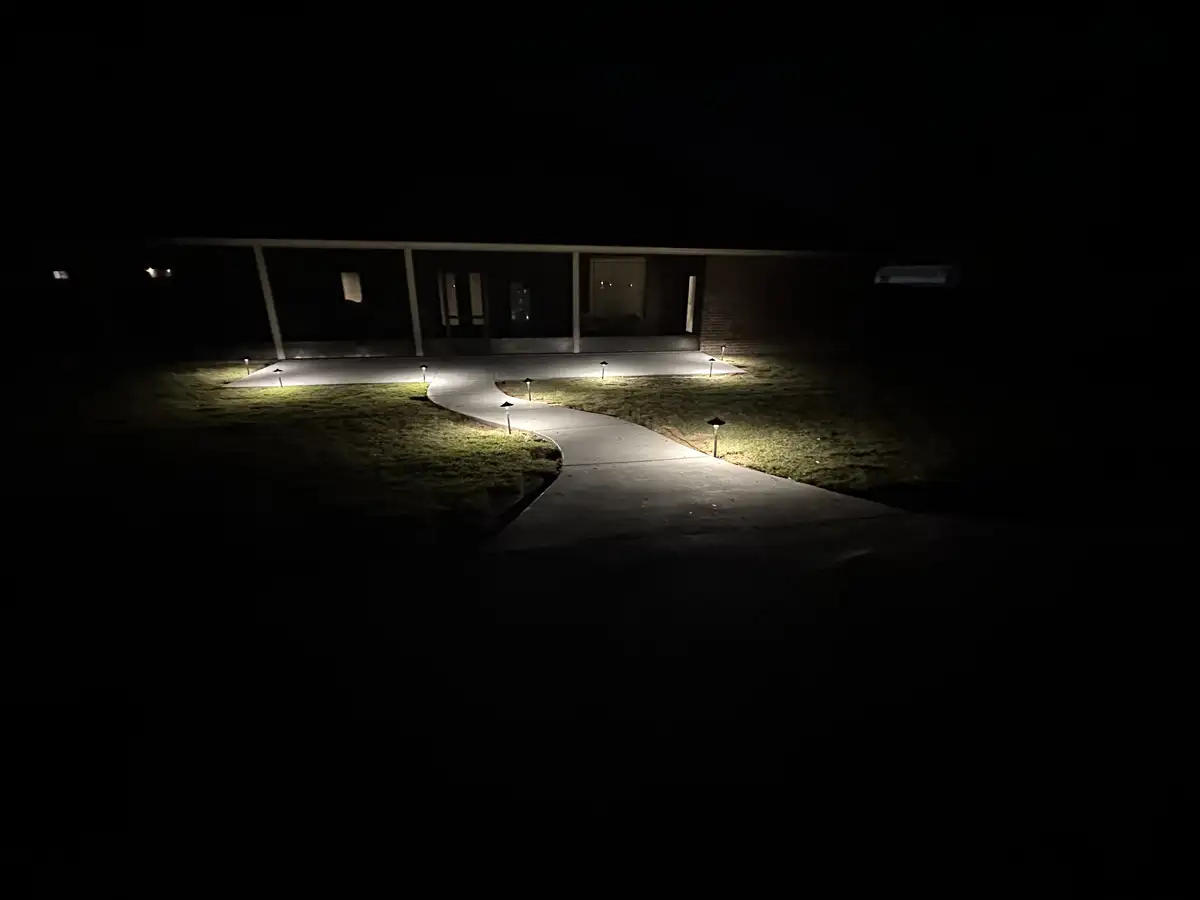
Site work can change a Milton-area estimate
Walk the proposed cable route before deciding that two prices cover the same job. Existing pavers, driveway crossings, roots and access to outdoor power can affect installation. Identify sprinkler heads, irrigation lines and places where water collects so the proposed lighting does not conflict with work already in your yard.
Discuss exposure at your particular home rather than assuming every Gulf Coast yard has the same conditions. Direct irrigation spray and wet locations affect equipment placement; proximity to saltwater is another reason to discuss the proposed housing, connections and care. FX Luminaire's transformer guidance, for example, places the equipment away from direct irrigation spray. Have your installer explain how the proposed equipment suits the exposure at your home.
Power work deserves its own line item. A low-voltage system still needs a suitable supply: manufacturer safety instructions specify GFCI-protected outdoor power for the equipment described. If a new outlet or circuit is needed, ask who provides that work and whether it is included. Have line-voltage work handled by a qualified electrical professional.
What does landscape lighting cost to run?
Your electricity cost depends on actual system input wattage, nightly operating hours and your utility rate. Transformer capacity is a limit, not a measurement of power continuously consumed. Use measured or specified input draw, including transformer and control consumption, for a better estimate.
This follows Virginia Cooperative Extension's energy-cost method. Running all night instead of only during the evening changes the result. Electricity is also separate from occasional cleaning, aiming, vegetation clearance and repairs; LEDs do not make the whole installation maintenance-free.
How to reduce the first phase without paying for rework
Begin with a useful, complete area: your front walk and entry, or the patio and steps you use most. Ask for decorative tree lighting or additional zones as separately priced options. That makes the tradeoff visible without treating every fixture as essential.
If you expect to expand, show the future areas now. Cable routing, control compatibility and transformer loading all need review. Manufacturer sizing guidance considers the connected load when selecting a transformer; spare wattage alone does not guarantee that any later addition will work. If paver work or new planting beds are also planned, coordinate routes before surfaces are finished.
Compare the total and the finished result
A useful written estimate identifies the areas being illuminated, fixture quantities and models, transformer and controls, wiring and installation, plus any electrical work or surface restoration priced separately. Confirm whether nighttime aiming or adjustment is included, and how future service is handled.
Choose the proposal that fits how you use your yard. A lower total that omits your entry steps, power work or needed connections can leave you budgeting twice. For placement ideas after you set the budget, see Best Landscape Lighting Ideas for Gulf Coast Homes; for layout decisions, read Low-Glare Landscape Lighting Design in Milton FL.
Landscape lighting cost FAQ
How much should I budget for landscape lighting?
Way's published lighting guide lists approximately $2,500 to $4,500 for 8–12 LED fixtures with a transformer and installation, and $5,000 to $10,000 for a 20–30-fixture design. These are planning ranges, not a quote. Your layout, equipment and installation conditions determine the proposal.
Is a lower price per light always a better deal?
No. Compare the fixture models, illuminated areas, transformer, controls, wiring, installation and restoration included in each total. A price per light is useful only when the equipment and scope are comparable.
Can I lower the initial cost by adding lights in phases?
You can ask for a first phase focused on your entry, walking routes or patio. Plan later additions before installation so transformer capacity, cable routes and controls can be assessed. Expansion is not automatically covered by unused transformer wattage alone.
Do I need an electrician for landscape lighting?
A low-voltage lighting layout still depends on suitable household power. Ask whether the estimate includes any needed outlet, circuit or GFCI work, and who will perform it. A qualified electrical professional should handle line-voltage work; applicable requirements depend on the scope and jurisdiction.