
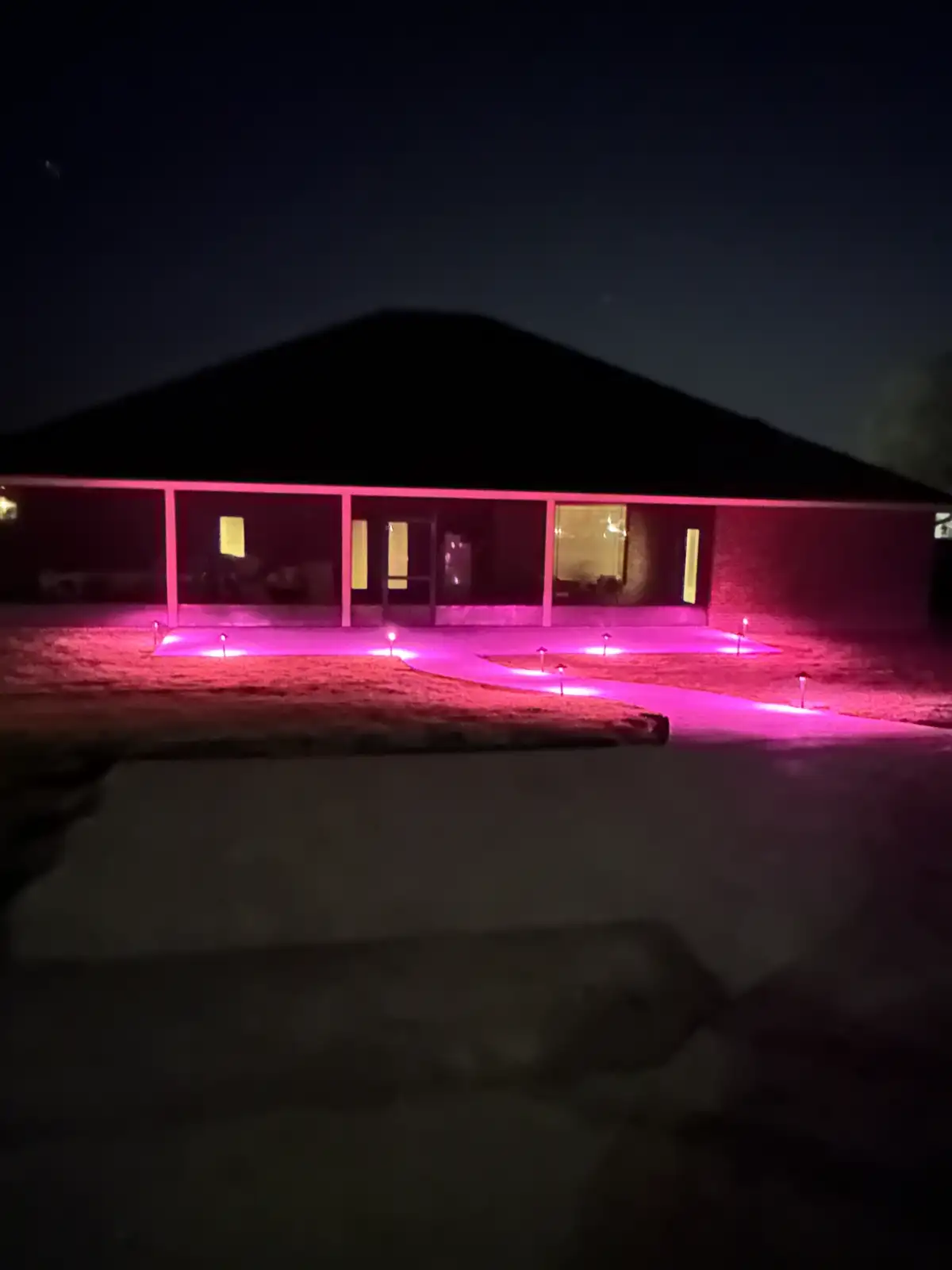
A well-lit home does not have to be a brightly lit home. The most comfortable landscape lighting reveals the shape of a house and yard while keeping the light source out of view. Walkways feel clear, trees gain depth, and a patio stays inviting without glare in a guest's eyes or a harsh beam through the windows.
That restrained approach is especially effective for Milton homes with deep front yards, mature trees or outdoor spaces that disappear into darkness beyond the porch. Instead of treating every surface equally, a layered low-voltage lighting design creates a few useful focal points and lets the darker areas between them provide contrast.
Use contrast instead of covering the yard in light
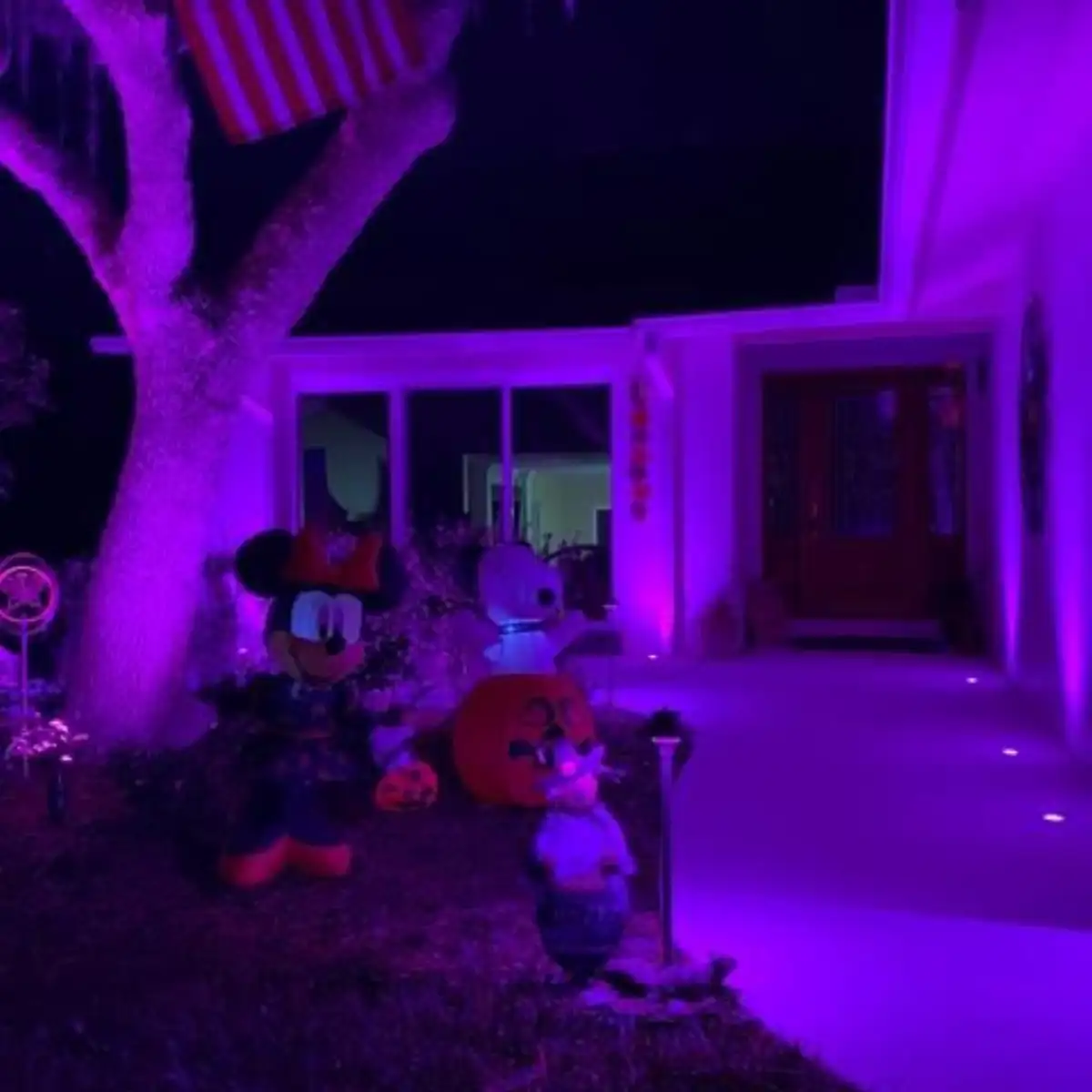
When every wall, shrub and path receives the same amount of light, the property can look flat. A better composition alternates brighter focal points with softer transition areas. One specimen tree might anchor the front yard, a wash of light can reveal the entry, and a small number of path fixtures can carry the eye between them.
Contrast also helps the eye adjust naturally. The goal is not to recreate daylight. It is to make steps and destinations easy to recognize while preserving the quiet atmosphere that makes an evening yard enjoyable.
Choose warm light that belongs with the home
Warm-white light generally feels at home against brick, stone, wood, stucco and green foliage. Cooler, blue-leaning light can make a residential landscape feel stark, especially when it is much brighter than the porch lights or interior windows nearby. Keeping the color appearance consistent across the front elevation, paths and planting beds creates a more composed result.
Material color matters as much as plant color. Red brick benefits from a different balance than pale stucco, and silver-green foliage reflects light differently than a dark live oak canopy. The evening view should guide the final choice instead of relying only on how a fixture looks during the day.
Hide the source and aim at the feature
Glare happens when the eye sees the bright lamp or a concentrated hotspot rather than the surface being illuminated. Shielded fixtures, careful aiming and thoughtful placement help keep the source below normal sightlines. Uplights can sit behind low planting where appropriate, while path lights should direct light down toward the walking surface rather than outward toward the street.
Viewing angles change around a property. A fixture hidden from the driveway may be obvious from a front window or patio chair, so the layout needs to be checked from the places where people actually approach, sit and look out after dark.
Light architecture with restraint
A home usually looks more dimensional when light catches selected columns, corners or textured surfaces instead of flooding the entire facade. Narrower accents can emphasize height on a palm or column; a softer wash can reveal stonework without producing a bright bull's-eye. Rooflines, windows and neighboring properties set the boundaries for each beam.
Trees need the same restraint. One well-aimed beam can reveal branching and canopy texture, while several competing fixtures may erase the shadows that make the tree interesting. Mature oaks and tall palms on larger Milton properties often benefit from different aiming approaches because their forms and viewing distances are not the same.
Treat patios as outdoor rooms
Patio and seating areas need softer light than a driveway or arrival path. Illumination can come from nearby planting, step lights, under-cap fixtures or carefully placed accents that bounce light from a surface. Keeping direct beams away from chairs and dining positions helps people stay comfortable as their eyes adjust to the evening.
Separate zones can also preserve the mood. The front landscape may operate for curb appeal while a backyard outdoor living area is used only when people are outside. The design should support the way each space feels, not simply turn every fixture on at once.
Finish the design with a nighttime aiming check
Fixture locations chosen in daylight are only a starting point. After dark, small changes in angle can remove glare, shift a hotspot off a window and improve the balance between nearby features. A final walk should include the street, driveway, entry, interior window views and primary seating areas.
Landscapes continue to change after installation. Palms expand, shrubs fill in and seasonal growth can block or expose a beam. Occasional cleaning, pruning clearance and aiming adjustments keep the original composition intact without adding unnecessary brightness.
See your Milton home in the right light
Way's Lawn and Landscape LLC designs and installs warm, low-voltage lighting for architecture, trees, walkways and outdoor living spaces in Milton and nearby Northwest Florida communities.
Discuss Your Lighting DesignA simple low-glare design checklist
- Keep lamps and concentrated hotspots out of normal sightlines.
- Match the warmth of the landscape lighting to the home's exterior and porch lighting.
- Use distinct focal points instead of lighting every plant and surface.
- Check the view from windows, seating areas, the driveway and the street.
- Aim fixtures after sunset and adjust them as the landscape grows.