
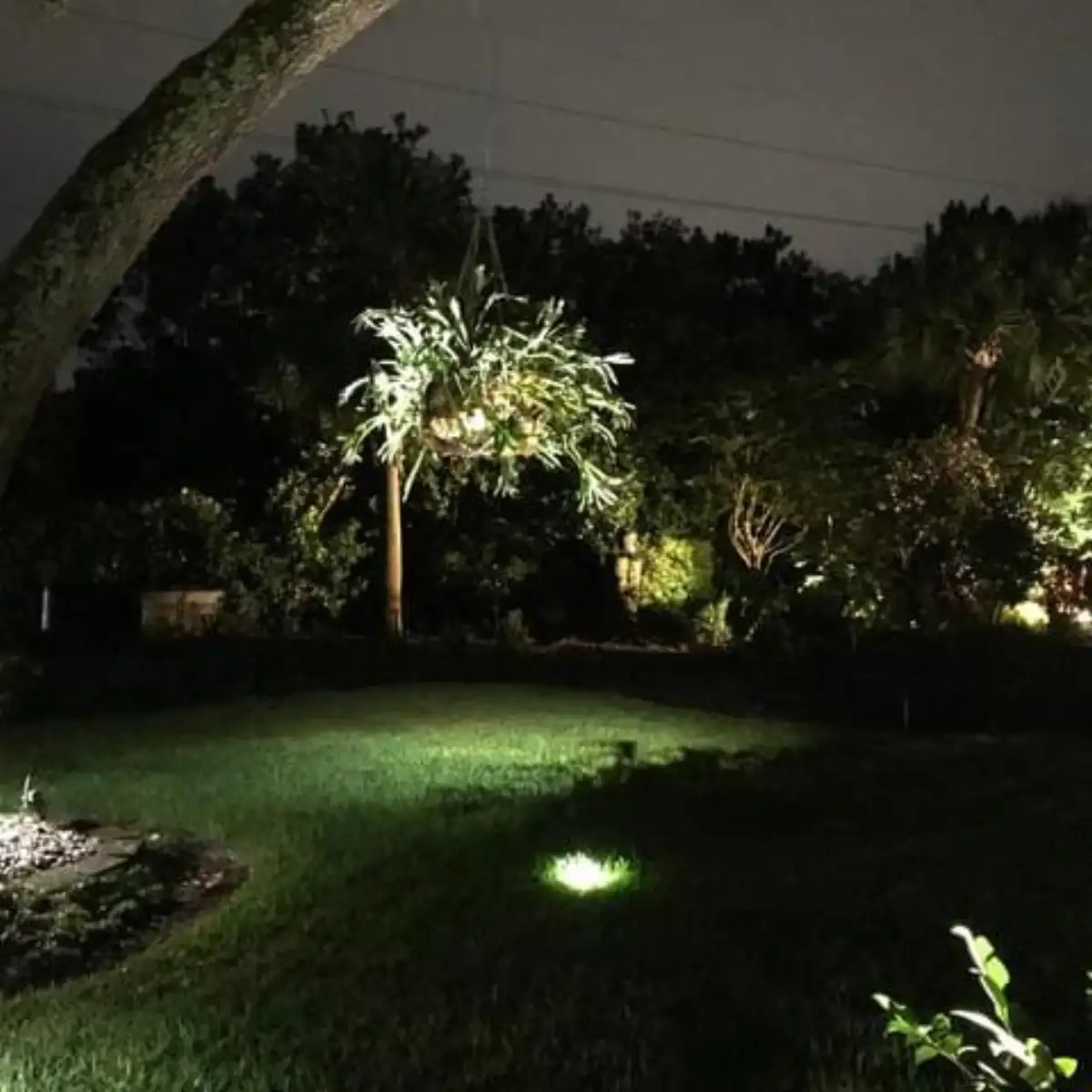
A professionally designed landscape lighting system transforms your property after dark, typically increasing home value by 15% to 20% while cutting the risk of trips, falls, and break-ins. For Gulf Coast homeowners in Pensacola, Destin, Gulf Breeze, and the surrounding area, the right lighting design also means choosing fixtures that withstand salt air, high humidity, and Florida's intense storm season.
At Way's Lawn and Landscape, we have designed and installed landscape lighting systems across Northwest Florida for over 15 years. Below are the lighting techniques that deliver the best results for coastal properties, along with practical guidance on fixture selection, placement, and smart controls.
1. Uplighting Trees and Architectural Features
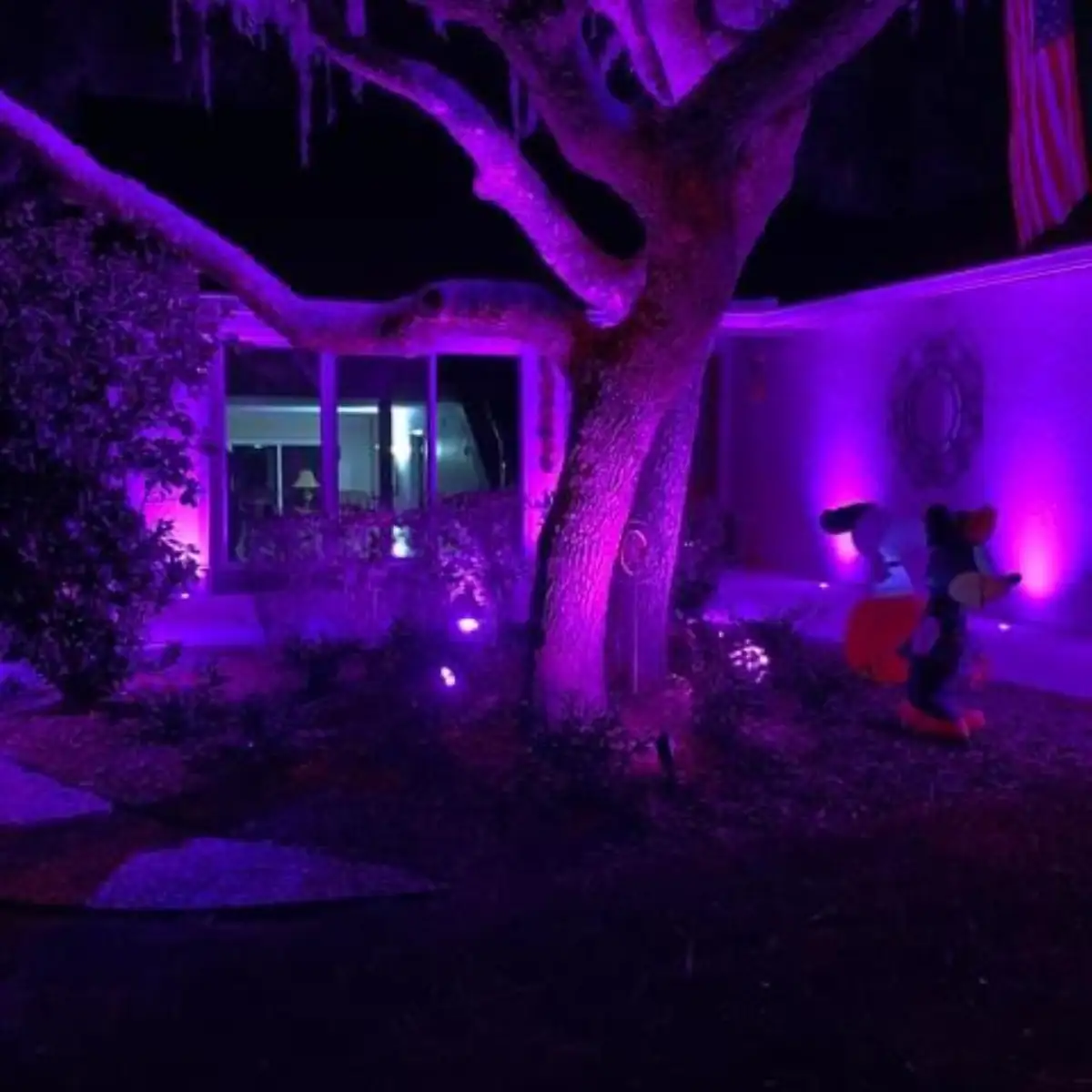
Uplighting is the single most dramatic technique in landscape lighting. A well-placed uplight at the base of a live oak, magnolia, or palm tree creates depth, shadow, and visual interest that completely changes how your property looks after dark.
How it works: A directional fixture is installed at ground level, angled upward into the canopy or along a wall surface. The light catches branches, bark texture, and leaves, creating natural shadow patterns on surrounding surfaces.
Best applications for Gulf Coast homes:
- Live oaks -- The spreading canopy and textured bark of live oaks make them the ideal specimen for uplighting. Two to three fixtures per tree, depending on size.
- Palm trees -- A single uplight at the trunk base highlights the frond pattern and adds a tropical feel. Coconut palms, sabal palms, and Washingtonia palms all look exceptional.
- Facade and columns -- Uplighting your home's facade or porch columns with warm white LEDs (2700K) creates a welcoming glow without harsh shadows.
- Ornamental grasses and specimen plants -- Backlit muhly grass or bird of paradise creates a striking silhouette effect.
Pro tip: Position uplights 6 to 12 inches from the trunk or wall for the best wash. Too close creates a narrow, harsh beam. Too far away and the light scatters before reaching the canopy.
2. Path and Walkway Lighting
Path lighting is the backbone of any functional landscape lighting design. It guides visitors safely from the driveway to the front door, around the side of the house, and through garden areas.
Key guidelines for Gulf Coast installations:
- Spacing: Place path lights 6 to 8 feet apart in a staggered pattern (not straight lines). This creates a natural, inviting rhythm rather than an airport runway look.
- Height: Fixtures should stand 14 to 18 inches tall. This provides enough height to cast light across the path without being obtrusive during the day.
- Position: Set fixtures 6 to 8 inches back from the path edge. This prevents mower damage and allows the light pool to cover the walking surface.
- Material: Use solid brass or copper path lights. Aluminum fixtures corrode rapidly in Pensacola's humid, salty air, even miles from the beach.
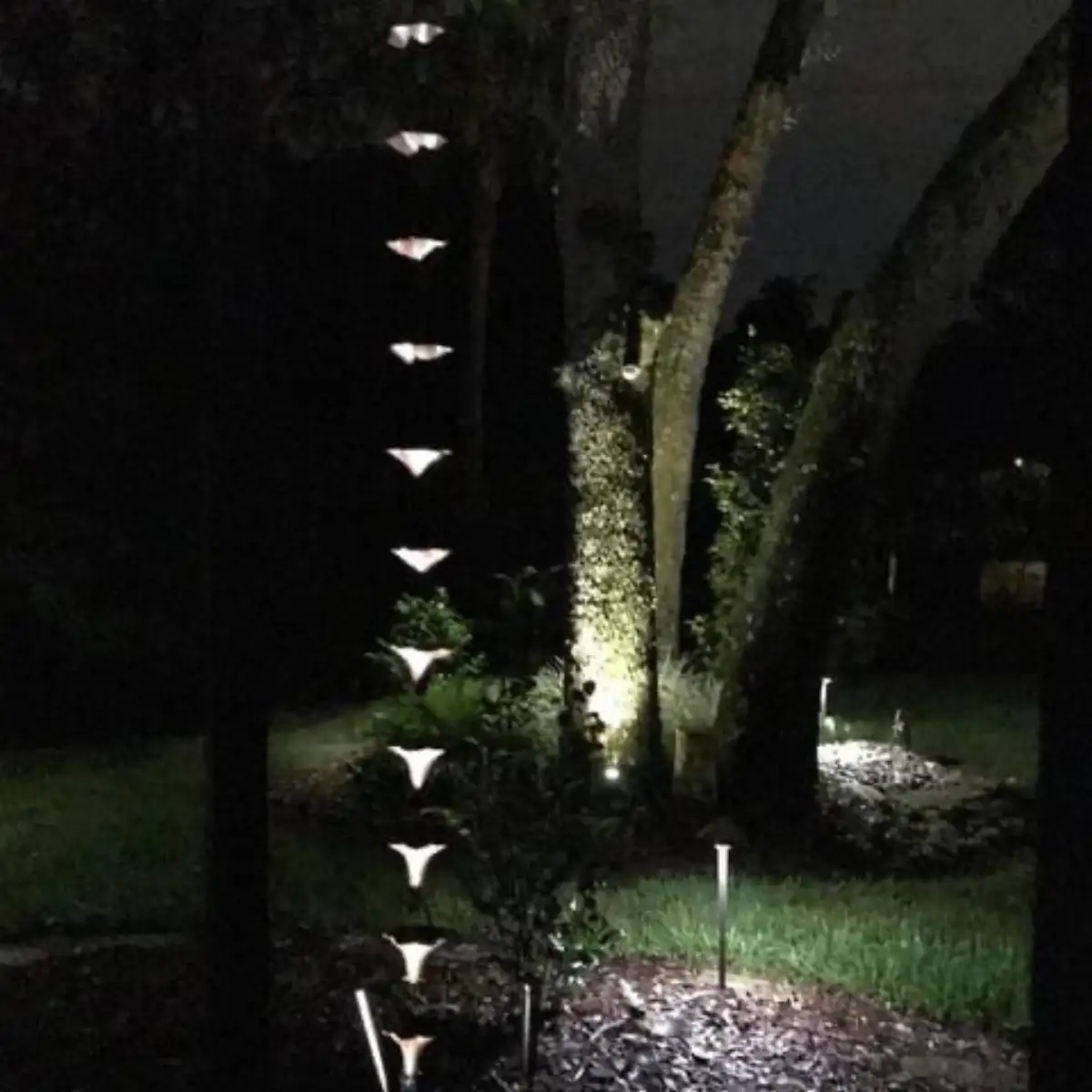
Path lighting also works along the edges of paver patios, around pool decks, and flanking driveway entrances. For properties with multiple walkway zones, we typically run separate lighting circuits so you can control front yard, backyard, and side paths independently.
3. Deck, Patio, and Outdoor Living Lights
Your outdoor living space becomes a true extension of your home when you add the right lighting. The goal is layered illumination: ambient light for atmosphere, task light for cooking and dining, and accent light for visual interest.
Techniques that work best on patios and decks:
- Step lights -- Recessed into risers or retaining walls, step lights mark elevation changes and prevent trips. Essential for multi-level paver patios or raised decks.
- Under-cap lighting -- LED strips tucked under the lip of seat walls, countertops, or raised planters create a soft, indirect glow that defines the space without glare.
- Pergola downlights -- Small fixtures mounted in pergola beams cast a warm wash over dining and seating areas. Aim for 2700K to 3000K color temperature for the most natural look.
- Fire feature accents -- If you have a fire pit or outdoor fireplace, subtle lighting around the surrounding hardscape keeps the area safe while letting the fire be the visual focal point.
For outdoor kitchens, we add task lighting under range hoods or overhangs so you can actually see what you are grilling after sunset. This is a functional detail that many lighting designs miss.
4. Security and Flood Lighting
Security lighting protects your property and deters intruders, but it does not have to look like a prison yard. Modern landscape lighting design integrates security into the overall aesthetic so your home is well-lit without harsh floodlights.
Effective security lighting strategies:
- Downlighting from trees (moonlighting) -- Fixtures mounted 15 to 25 feet up in mature trees cast a soft, dappled light across the yard. It illuminates large areas naturally while eliminating hiding spots in shadows.
- Soffit and eave lights -- Small, recessed fixtures in the soffit provide a gentle wash down the walls and illuminate the perimeter of your home.
- Motion-activated zones -- Integrate select fixtures with motion sensors so side yards, back gates, and garage areas light up on demand.
- Driveway entrance lights -- Bollard or pillar lights at the driveway entrance improve visibility for drivers and clearly mark your property boundary.
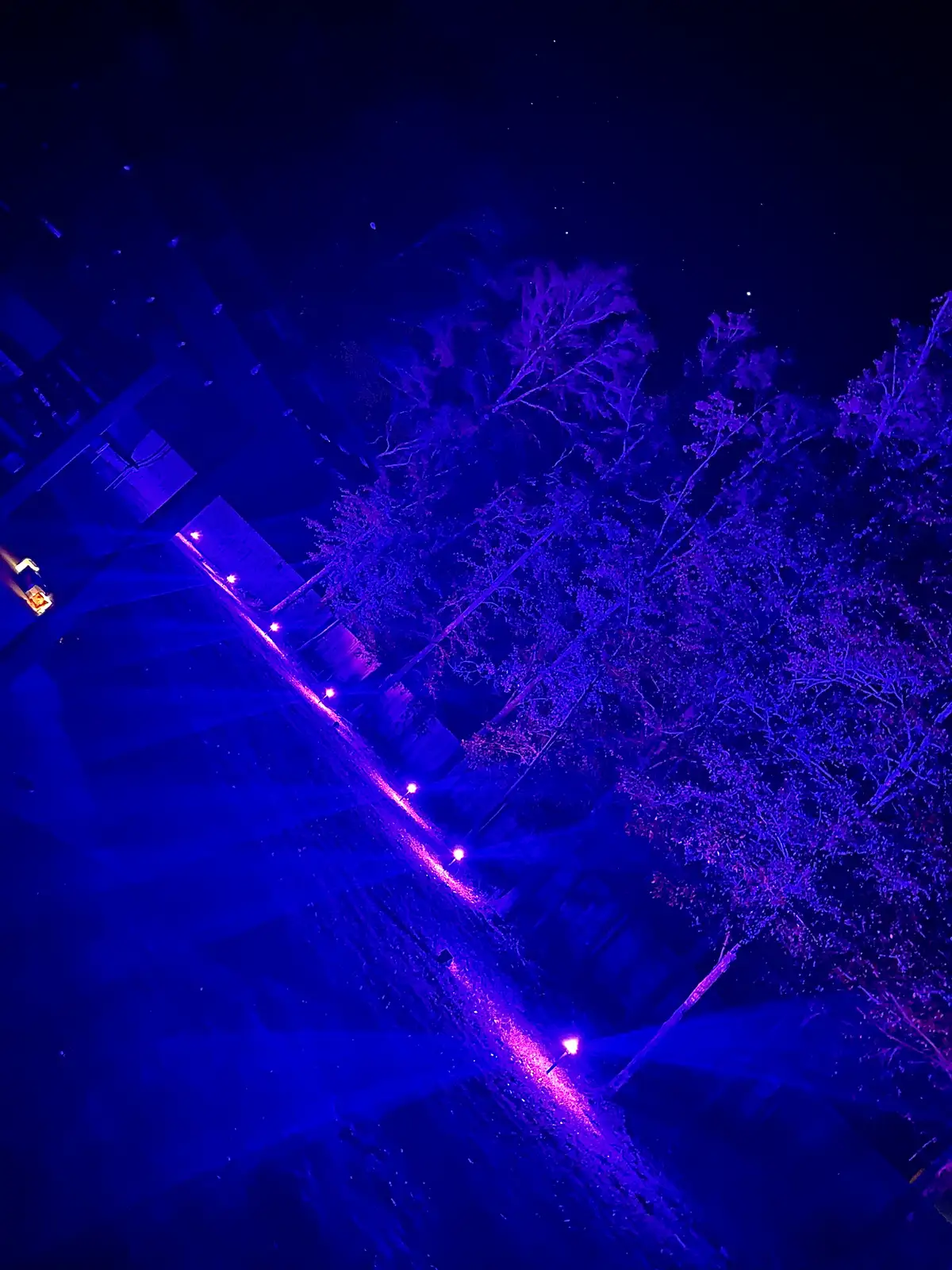
Studies consistently show that well-lit properties experience significantly fewer break-in attempts than dark ones. Good lighting removes the cover that criminals depend on, and it does so 365 nights a year without any ongoing effort from you.
5. Salt-Resistant Fixtures for Coastal Properties
This is where Gulf Coast lighting installations diverge from inland projects. Salt air corrodes standard fixtures within 1 to 3 years, turning what should be a 15-year investment into a constant repair job. Here is what we recommend and install:
| Fixture Material | Salt Resistance | Lifespan (Coastal) | Cost Level |
|---|---|---|---|
| Solid Brass | Excellent | 20+ years | $$$ |
| Solid Copper | Excellent | 20+ years | $$$ |
| Marine-Grade Stainless (316) | Very Good | 15 - 20 years | $$ |
| Painted Aluminum | Poor | 1 - 3 years | $ |
| Cast Aluminum (powder-coated) | Fair | 3 - 7 years | $ |
Our recommendation: For any property within 15 miles of the Gulf (which covers most of Pensacola, Gulf Breeze, Navarre, Destin, and Fort Walton Beach), use solid brass or copper fixtures. The upfront cost is 30% to 50% higher than aluminum, but you avoid the cycle of replacing corroded fixtures every few years. Brass develops a natural green patina over time that actually protects against further corrosion. Many homeowners prefer the aged-brass look for its character.
Beyond the fixture body, pay attention to hardware. Stainless steel screws (316 grade), silicone-filled wire connectors, and direct-burial rated cable are all essential for coastal installations.
6. Smart Controls and Automation
Modern landscape lighting systems go well beyond a basic timer. Smart controls let you manage your entire lighting system from your phone, set schedules that adjust with sunset times, and create different scenes for different occasions.
Features worth investing in:
- Astronomical timer -- Automatically adjusts on/off times as daylight hours change throughout the year. No manual clock adjustments needed.
- Zone control -- Turn on front yard lights for curb appeal while leaving backyard lights off, or vice versa. Each zone operates independently.
- Dimming capability -- Reduce brightness for intimate evenings on the patio or increase it when hosting gatherings.
- Wi-Fi or Bluetooth control -- Adjust settings from inside the house or while traveling. Some systems integrate with Alexa, Google Home, or Apple HomeKit.
- Vacation mode -- Randomize on/off patterns when you are away to create the appearance of an occupied home.
We typically install smart transformers that include all of these features. The transformer is the brain of the system, mounted near your outdoor electrical outlet, and it powers the entire 12-volt lighting network. Most residential properties need a 300-watt to 600-watt transformer depending on the number of fixtures.
7. Energy Efficiency and Operating Costs
LED technology has made landscape lighting remarkably affordable to operate. Here are the numbers:
- A typical LED landscape fixture uses 3 to 8 watts (compared to 20 to 50 watts for older halogen fixtures)
- A 15-fixture system running 8 hours per night uses about 60-120 watts total, roughly the same as one incandescent light bulb
- Average monthly operating cost for a full residential lighting system: $3 to $8 at Gulf Power's current rates
- LED bulbs last 40,000 to 50,000 hours, which means 10 to 15 years before replacement is needed
The combination of low operating costs and long bulb life makes LED landscape lighting one of the highest-return outdoor improvements you can make. The curb appeal benefit alone often pays for the installation when it comes time to sell.
Getting Started with Your Lighting Design
A lighting design is not something you eyeball from a catalog. The best results come from an on-site assessment where a designer walks your property at dusk, identifies the key features worth highlighting, maps out fixture locations, and calculates the wattage load for proper transformer sizing.
At Way's Lawn and Landscape, our lighting consultations include:
- On-site property walkthrough at dusk to evaluate natural light conditions
- Custom lighting plan with fixture placement recommendations
- Material recommendations based on proximity to the coast
- Detailed quote with fixture, transformer, and installation costs
- Integration planning with existing irrigation, landscaping, or patio projects
Ready to Light Up Your Property?
We design and install landscape lighting systems across Pensacola, Gulf Breeze, Navarre, Destin, Fort Walton Beach, and the entire Gulf Coast corridor. Free on-site consultations available.
Schedule Your Free ConsultationFrequently Asked Questions
How much does landscape lighting cost in Pensacola?
A professional landscape lighting in Pensacola typically costs $2,000 to $6,000 for a standard residential property. This includes 10 to 20 fixtures, a transformer, wiring, and installation labor. Larger properties or extensive lighting designs can run $8,000 to $15,000+.
Do LED landscape lights work in salty coastal air?
Yes, but only if you choose fixtures rated for coastal environments. Look for fixtures made from solid brass, copper, or marine-grade stainless steel. Avoid painted aluminum fixtures near the coast -- salt air corrodes aluminum quickly. Quality brass fixtures develop a natural patina that actually protects them from further corrosion.
How long do LED landscape lights last in Florida?
Quality LED landscape light bulbs last 40,000 to 50,000 hours, which translates to roughly 10 to 15 years of nightly use (8-10 hours per night). The fixtures themselves, if made from corrosion-resistant materials like brass, can last 20+ years in Gulf Coast conditions.
Can landscape lighting be added to an existing patio?
Absolutely. Low-voltage landscape lighting can be retrofitted to any existing patio, landscape, or outdoor living space. Wiring is buried in shallow trenches (6-8 inches) alongside planting beds or under mulch areas. The installation is minimally invasive and typically takes 1 to 2 days.
What voltage is best for residential landscape lighting?
12-volt low-voltage systems are the standard for residential landscape lighting. They are safe (no risk of electrical shock), energy-efficient, and do not require a licensed electrician for installation in most jurisdictions. Line-voltage (120V) is only used for very specific commercial applications.