Retaining Wall Contractor Planning
A practical guide to choosing a retaining wall contractor for Gulf Coast slopes, drainage problems, grade changes, and outdoor living projects.
The Wall Has to Solve the Site Problem
A retaining wall is not just a row of blocks. It is a grade-control system that has to manage soil pressure, water movement, usable space, and the way the yard will be maintained after installation. Way's Lawn and Landscape starts by identifying why the wall is needed: slope stabilization, patio expansion, erosion repair, driveway support, planting bed definition, or a cleaner transition between outdoor living areas.
That purpose changes the design. A short decorative wall at the edge of a bed does not need the same planning as a wall holding back a slope near a patio. A wall behind a seating area needs clean finish work and comfortable proportions. A wall catching runoff from a higher grade needs drainage stone, fabric, outlet planning, and careful backfill. The right contractor should be able to explain the difference before quoting.
Drainage Behind the Wall
Most retaining wall failures are water failures. When water builds behind the wall, pressure increases, soil moves, blocks lean, and caps separate. Northwest Florida rain can arrive fast, and sandy soils can move quickly when runoff concentrates behind a wall. That is why drainage planning is not optional. It is part of the wall system.
A proper plan may include clean stone behind the wall, geotextile fabric, perforated drain pipe, weep points, outlet routing, surface grading, and downspout redirection. The exact combination depends on height, slope, soil, nearby structures, and where water can discharge safely. A contractor who only discusses block color and wall length is missing the most important part of the project.
Height, Load, and Engineering Considerations
Wall height affects complexity. Taller walls experience more pressure and may require geogrid reinforcement, stepped-back courses, terracing, or engineering review depending on local conditions and load. Extra loads from driveways, patios, pools, fences, structures, or steep slopes above the wall also matter. These details should be addressed before installation, not discovered after excavation begins.
Some projects are better handled as a series of lower terraced walls instead of one tall wall. Terracing can reduce pressure, create planting zones, improve access, and make the finished yard feel more natural. It can also provide a safer and more attractive solution for coastal or inland lots with grade changes.
Materials and Finish Details
Segmental concrete wall block, natural stone, poured structures, and hybrid hardscape designs all have a place. The right material depends on height, soil pressure, budget, style, and how the wall connects to patios, steps, beds, and lighting. Cap selection, corner details, curves, and transitions are important because they are the parts people see every day.
Way's Lawn and Landscape helps homeowners choose wall materials that fit the property rather than forcing a generic block into every design. Coastal homes may need a cleaner finish that pairs with pavers and outdoor living features. Rural or wooded sites may call for a more natural look. Commercial or HOA areas may prioritize clean lines and low maintenance.
Installation Sequence and Site Access
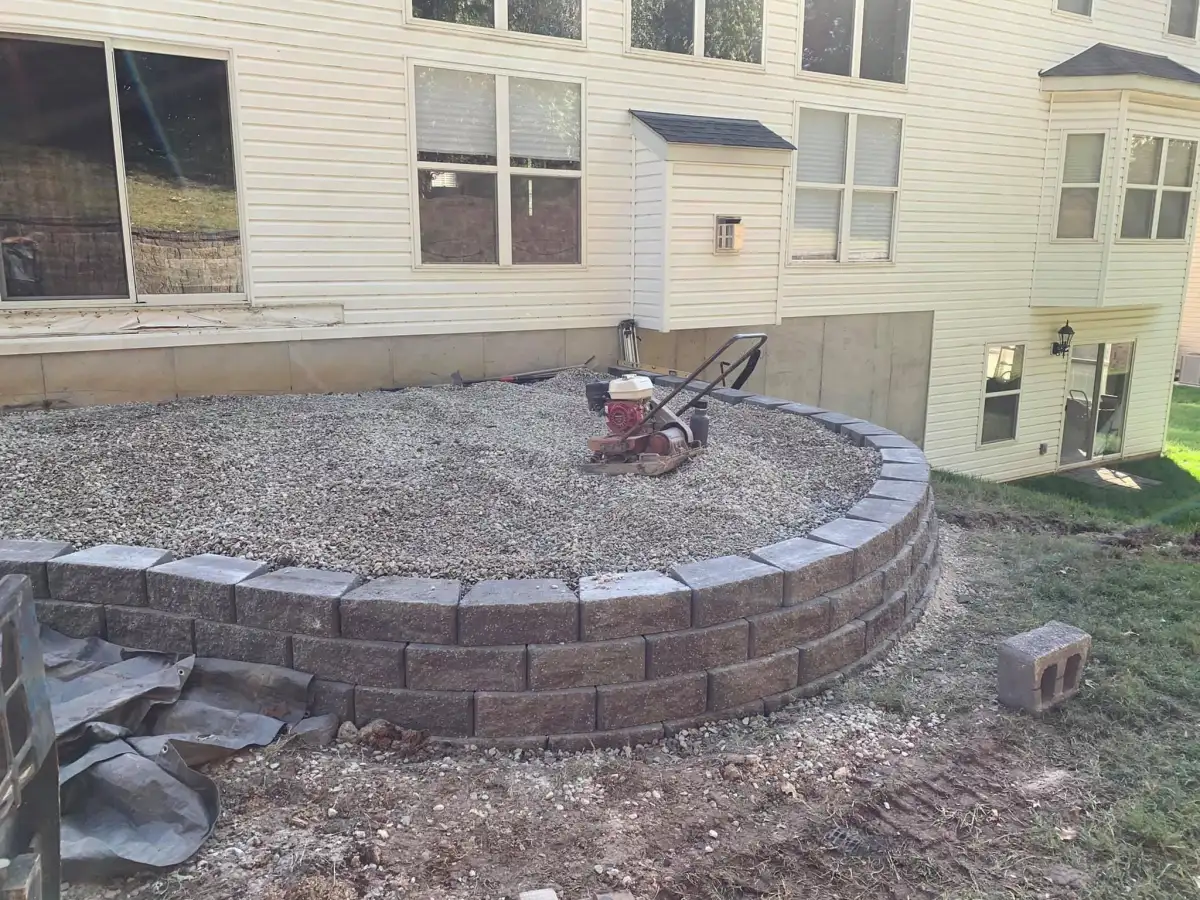
A retaining wall installation typically includes layout, utility awareness, excavation, base trench preparation, compaction, leveling, block placement, drainage backfill, reinforcement if needed, cap installation, grading, and cleanup. Access can affect cost and schedule. A wall in a tight backyard with fence constraints is different from a wall beside an open driveway.
The contractor should discuss equipment access, staging areas, soil removal, existing irrigation, tree roots, and how the yard will be restored after construction. Those details help prevent damage to lawns, driveways, gates, and nearby beds. They also help the homeowner understand what the property will look like during the project.
When to Call Before It Gets Worse
Early signs of retaining or erosion problems include exposed roots, soil washing over sidewalks, leaning landscape edging, cracks near a slope, saturated low spots, mulch movement, and small channels forming after storms. Waiting usually makes the repair larger because each rain event moves more soil and increases instability.
If a wall is already leaning, separating, or pushing outward, the repair should be evaluated carefully. Adding more block or soil to a failing wall rarely fixes the cause. The correct repair usually starts with drainage, base, reinforcement, or grade corrections so the replacement does not repeat the same failure.
Planning Questions
Any wall holding back soil should be evaluated for drainage. Even short walls can fail when water concentrates behind them. The design may be simple or more involved depending on height, slope, soil, and discharge options.
Yes. A properly designed wall can flatten a seating area, support a patio, define planting beds, or make a sloped yard easier to maintain. The layout should be planned around how the space will be used after the grade is corrected.
Common causes include poor base preparation, inadequate drainage, missing reinforcement, saturated backfill, extra loads above the wall, and soil movement. A site visit is needed to identify the actual cause.
Yes. Low-voltage lighting can be integrated into walls, steps, and nearby beds. It is best to plan wiring paths before construction so the finished wall does not need to be disturbed later.
Ready to Walk the Site?
Tell us about your property, timing, and goals. Way's Lawn and Landscape will follow up to schedule a free estimate.