
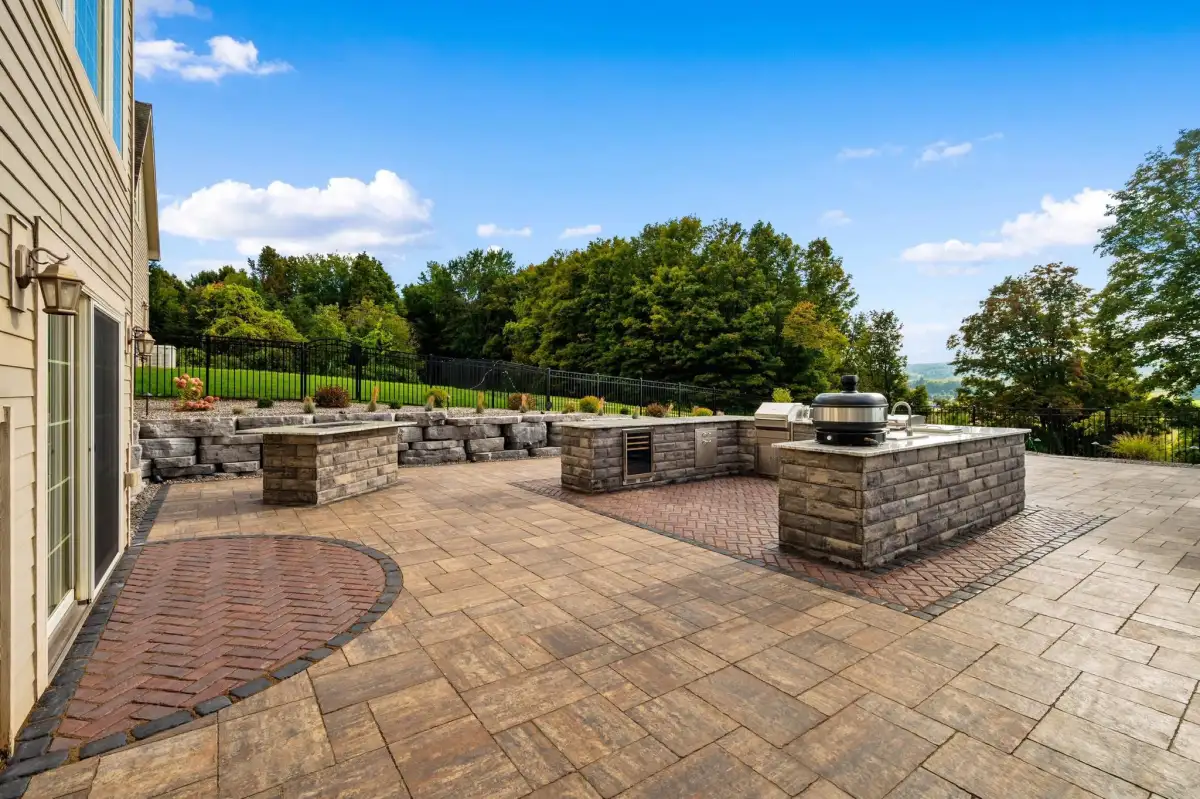
Outdoor Living Spaces Planning
A focused planning page for outdoor living spaces that combine patios, kitchens, fire features, lighting, landscaping, and drainage into one usable design.
Plan the Whole Space, Not One Feature
An outdoor living space works best when the patio, seating, cooking area, lighting, shade, landscaping, and circulation are planned together. A beautiful grill station can feel cramped if the dining table blocks the walkway. A large patio can feel unfinished without planting, privacy, or lighting. Way's Lawn and Landscape starts by mapping how people will enter, cook, sit, move, and see the space from inside the home.
This whole-space approach is especially important on Gulf Coast properties where heat, storms, sandy soils, salt air, and drainage all influence the design. The goal is not just a feature that photographs well. The goal is an outdoor area that can be used comfortably for weeknight dinners, family gatherings, football weekends, and quiet evenings after sunset.
Patio Size and Furniture Clearances
Outdoor living spaces often fail when the hardscape is too small for the furniture and movement patterns. Dining chairs need room to slide back. Grill lids need clearance. Fire pit seating needs safe distance. Walkways need to stay open even when guests are seated. We plan patio dimensions around real objects, not guesses.
The correct size depends on how the space will be used. A simple lounge area may need less square footage than a kitchen, dining table, and fire feature combination. Curved edges, seat walls, steps, and planting beds can make the space feel custom, but they need to be designed around function first.
Outdoor Kitchens and Utility Planning
Outdoor kitchens require practical decisions about grill placement, prep space, storage, appliances, ventilation, gas, electrical, water, and access for service. On the Gulf Coast, material selection also matters because humidity and salt air can damage low-quality finishes. Stainless components, masonry, countertops, and cabinets should be selected for exposure and maintenance expectations.
Utility planning should happen before hardscape installation whenever possible. Running sleeves, conduit, gas lines, or plumbing after a patio is finished can add cost and disruption. Even if a kitchen is a future phase, the patio can be built with that future location in mind so the homeowner does not have to undo completed work.
Shade, Privacy, and Comfort
Pensacola and the surrounding Gulf Coast can make an uncovered outdoor space uncomfortable during summer afternoons. Shade can come from pergolas, roof extensions, umbrellas, trees, or strategic orientation. Privacy can come from planting, screens, walls, fences, or grade changes. Comfort should be part of the first design conversation, not an accessory added after the space feels too exposed.
Planting also affects comfort. Salt-tolerant shrubs, palms, ornamental grasses, and evergreen screening can soften hardscape edges and reduce glare. The planting plan should avoid blocking airflow or crowding the patio as it matures. The best outdoor living spaces feel integrated with the landscape rather than dropped into the yard.
Lighting and Night Use
Many outdoor living spaces are used most often in the evening. Low-voltage lighting can make steps safer, highlight planting, define patio edges, illuminate cooking surfaces, and create a relaxed atmosphere. Lighting should be layered instead of relying on one bright fixture. Path lights, wall lights, under-cap lights, uplights, and task lighting all serve different purposes.
Planning lighting early allows wire routes and sleeves to be hidden cleanly. It also prevents conflicts with irrigation, plant roots, paver edges, and outdoor kitchen utilities. A nighttime walkthrough after installation helps aim fixtures and reduce glare into seating areas or windows.
Drainage, Base, and Long-Term Performance
Outdoor living projects usually add hard surfaces, which changes how water moves through the yard. Patios, walls, kitchens, and walkways need correct pitch, base preparation, and discharge planning. Without drainage planning, water can collect near the house, settle pavers, wash mulch, or saturate planting beds.
Way's Lawn and Landscape evaluates grade, downspouts, soil, low spots, and existing drainage before installation. If corrections are needed, they can be included with the design. Addressing water early protects the investment and helps the finished space remain usable after heavy Gulf Coast rain.
Phasing, Budget, and Material Choices
Many outdoor living projects are built in phases, and that can work well when the first phase is planned correctly. A homeowner may start with the patio and grading, add lighting and planting next, then return later for a grill station, pergola, fire feature, or seat wall. The important part is making sure early work does not block future utility routes, create awkward furniture clearances, or force finished pavers to be removed for the next phase.
Budget conversations should separate structural needs from finish choices. Base preparation, drainage, proper pitch, edge restraint, and safe clearances protect the project. Paver style, wall block, countertop material, appliances, lighting scenes, planting density, and privacy features shape the final look and cost. When those items are explained separately, homeowners can make informed decisions without sacrificing the parts that determine long-term performance.
Material selection is especially important along the Gulf Coast. Humidity, salt air, sandy soil, heavy rain, and intense sun affect pavers, masonry, metal finishes, wood structures, cabinets, and plant material. We recommend materials based on exposure and maintenance expectations, not just showroom appearance. A shaded courtyard, open west-facing patio, pool-adjacent kitchen, and waterfront property may each need different choices.
The finished space should also connect to the rest of the yard. Sod, drainage, irrigation, lighting, planting beds, and walkways make the difference between a standalone patio and an outdoor room that feels like part of the home. Coordinating those details from the beginning helps the project look complete on day one and stay practical through daily use, storms, and seasonal maintenance.
Planning Questions
Yes. Many projects are planned in phases. The key is designing the first phase with future kitchens, lighting, pergolas, planting, or fire features in mind so utilities and layout do not have to be reworked later.
The best first feature is usually the one that solves the main use problem. For some homes that is a patio. For others it is shade, drainage, a kitchen pad, lighting, or privacy screening.
A cover is not always required, but shade and weather protection can improve comfort and extend appliance life. Material choice and placement matter if the kitchen will be fully exposed.
Yes. Planting, sod, mulch, lighting, irrigation, and drainage can be coordinated with the hardscape so the outdoor room feels complete and performs well.
Ready to Walk the Site?
Tell us about your property, timing, and goals. Way's Lawn and Landscape will follow up to schedule a free estimate.