
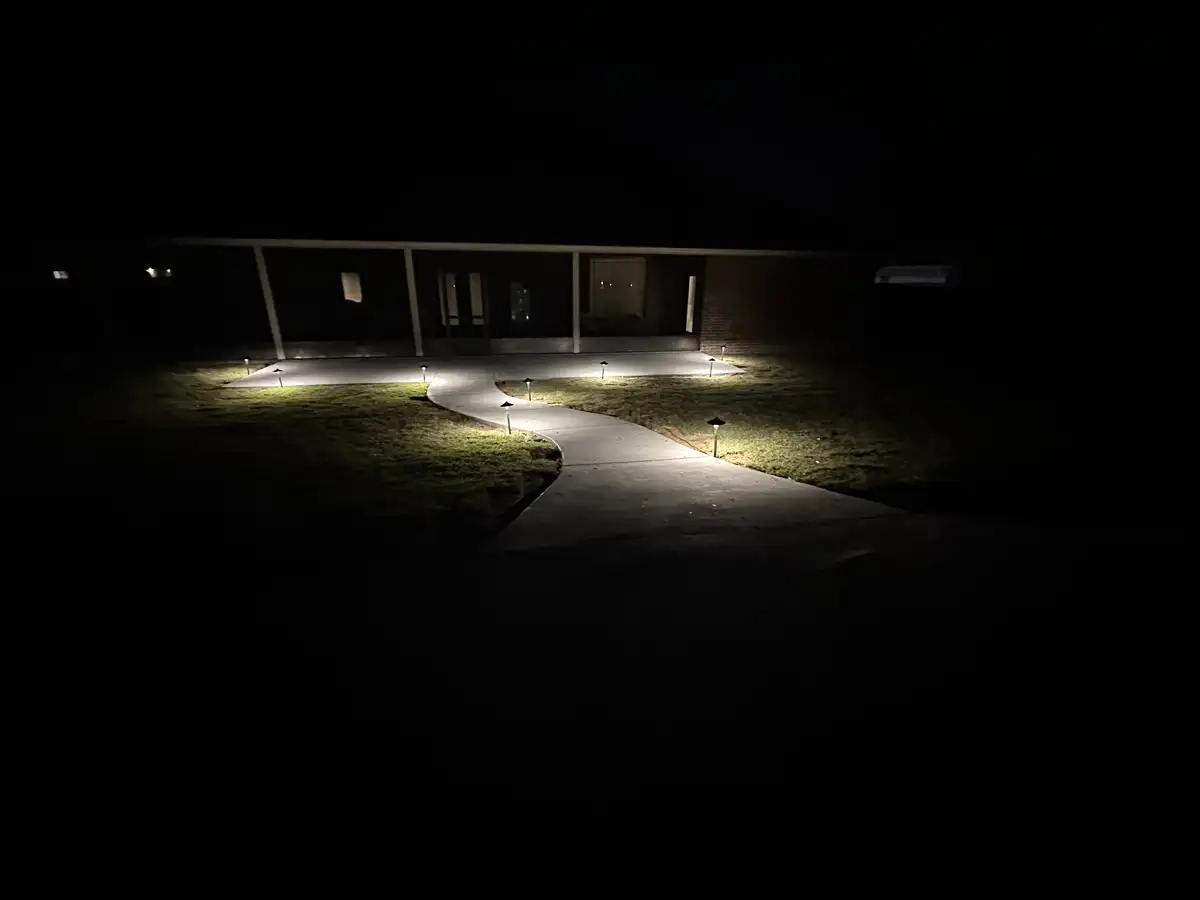
Landscape Lighting Installation Planning
Guidance for planning low-voltage landscape lighting that improves safety, curb appeal, and nighttime use without over-lighting the property.
Lighting Should Have a Purpose
Good landscape lighting is planned around what needs to be seen, not how many fixtures can be sold. A front entry may need safe path lighting. A patio may need gentle perimeter light so guests can move comfortably. Palms, oaks, architectural columns, retaining walls, and planting beds can be highlighted to create depth. Way's Lawn and Landscape designs lighting plans that support the property instead of washing every surface with the same brightness.
The first planning step is a nighttime use conversation. We ask where people enter, where they park, which walkways feel dark, where guests gather, and what parts of the landscape should be visible from inside the home. Those answers determine fixture types, beam spreads, mounting locations, transformer sizing, and control options.
Fixture Placement and Beam Control
Fixture placement decides whether the finished system looks refined or distracting. Uplights need the correct distance from trunks, palms, walls, and architectural features. Path lights need spacing that guides movement without creating a runway effect. Wall wash fixtures need enough setback to spread evenly. Downlighting requires careful placement so glare does not shine into windows or seating areas.
Beam angle, wattage, color temperature, and shielding all matter. A warm, controlled beam usually looks better on Gulf Coast homes than harsh white light. Fixtures should hide the source when possible and show the effect. The best lighting lets people notice the tree, texture, path, or patio rather than staring directly at the fixture.
Wiring Around Irrigation and Planting Beds
Landscape lighting often shares space with irrigation lines, plant roots, mulch, edging, drainage, and future bed changes. That makes installation planning important. Wiring should be placed with serviceability in mind, protected at crossings, and routed so routine bed work does not constantly disturb it. When irrigation heads spray directly onto fixtures, corrosion and mineral buildup can shorten fixture life.
Way's Lawn and Landscape considers irrigation zones, drainage paths, planting growth, and maintenance access when placing wire and fixtures. If lighting is being added during a larger landscape project, sleeves and wire routes can be planned before mulch, sod, or pavers go in. That produces a cleaner installation and reduces disruption.
Transformers, Timers, and Smart Controls
Low-voltage systems need a transformer sized for the fixture load and future expansion. It should be mounted in a practical location with safe power access and enough capacity for additional zones if the homeowner may expand later. Undersized transformers create problems when more lights are added. Oversizing without planning can waste money.
Controls can be simple or advanced. Astronomical timers adjust with sunrise and sunset. Smart controls allow scheduling from a phone. Photocells can work for basic dusk-to-dawn operation. The right choice depends on how often the homeowner wants to adjust scenes, whether vacation settings matter, and how the system should behave during seasonal time changes.
Coastal Durability Matters
Pensacola, Gulf Breeze, Navarre, Destin, 30A, Orange Beach, and nearby coastal areas expose fixtures to humidity, salt air, irrigation spray, mulch acids, and heat. Fixture material and connection quality matter. Cheap fixtures may look acceptable at installation and then fade, corrode, loosen, or leak after one or two seasons.
Durable lighting does not mean overbuilding every project. It means selecting appropriate fixtures, making clean waterproof connections, protecting wire, and placing fixtures where they can be maintained. We also discuss plant growth, palm trimming, mulch refreshes, and landscape changes so the lighting can be adjusted as the property matures.
Walkthrough and Night Aiming
The final aiming should happen in the dark. Daytime placement gets the system close, but nighttime adjustment reveals glare, shadows, hot spots, and uneven spacing. A good installation includes fine tuning so fixtures highlight the intended features and avoid shining into seating areas, bedrooms, neighboring homes, or drivers' eyes.
Homeowners should expect a clear explanation of zones, timer settings, transformer location, and basic maintenance. Fixtures may need seasonal adjustment as plants grow. That is normal. A well-planned system makes those adjustments straightforward instead of requiring major rewiring.
Designing for Safety, Curb Appeal, and Daily Use
The best landscape lighting plan balances three jobs: helping people move safely, making the property look finished from the street, and supporting how the outdoor areas are actually used at night. Path lights can guide guests from the driveway without making the yard feel like a runway. Step and wall lights can make changes in elevation visible. Accent lights can frame palms, oaks, entry columns, stone walls, or planting beds without overpowering the house.
Fixture spacing is not one-size-fits-all. A narrow walkway, wide paver patio, front entry, pool edge, driveway curve, and outdoor kitchen all need different light levels. Too few fixtures leave dark gaps. Too many fixtures create glare and flatten the landscape. We plan fixture type, beam spread, height, and aiming together so the lighting feels intentional from multiple viewing points, including inside the home.
Maintenance access is another practical detail. Fixtures should be reachable for cleaning and aiming, wire connections should be protected from mulch work and irrigation spray, and transformers should be placed where they can be serviced. On Gulf Coast properties, storm cleanup, palm trimming, fast plant growth, and salt air all affect how a system performs over time. Durable materials and clean connections reduce callbacks and keep the system looking consistent.
Lighting can also be phased. A homeowner may start with the front entry and main walkway, then add backyard patio lighting, tree accents, or outdoor kitchen task lighting later. Planning transformer capacity and wire routes with that future growth in mind keeps the first phase from limiting the next one.
Planning Questions
The count depends on the goals, not just the size of the yard. Entries, paths, patios, trees, walls, and architectural features each need different fixture types and spacing. A site visit is the best way to plan the count.
Warm white is usually preferred for residential landscapes because it feels natural and does not make plants or hardscape look harsh. Exact temperature depends on materials, house color, and desired mood.
Yes. Existing beds can usually receive lighting with careful wire routing and minimal disruption. If a landscape renovation is planned, it is best to coordinate lighting before mulch, sod, or pavers are installed.
A quality system needs occasional fixture cleaning, aiming, and timer checks. Plant growth, mulch work, and storms can shift fixtures, but routine maintenance is usually simple when the system is installed correctly.
Ready to Walk the Site?
Tell us about your property, timing, and goals. Way's Lawn and Landscape will follow up to schedule a free estimate.