
Irrigation Install Planning
A planning guide for irrigation installation that accounts for Gulf Coast rainfall patterns, sandy soils, plant zones, water efficiency, and service access.
An Irrigation Install Is a Zoning Plan
A useful irrigation system does more than turn sprinklers on. It separates the property into zones based on sun exposure, turf type, plant material, soil, slope, and water demand. A full-sun zoysia lawn, shaded St. Augustine side yard, new planting bed, palm grouping, and foundation shrubs should not all receive the same watering schedule. Way's Lawn and Landscape plans irrigation zones around what the landscape needs to stay healthy without wasting water.
Northwest Florida receives heavy annual rainfall, but the timing is uneven. Long dry stretches can stress lawns and new plants between storm cycles. A professional irrigation install fills those gaps with controlled watering instead of relying on a hose, temporary sprinkler, or one schedule for the entire yard.
Coverage and Head Layout
Sprinkler coverage should be head-to-head wherever practical, meaning each head reaches the next head so dry gaps do not form between spray patterns. Poor layout creates brown arcs, wet sidewalks, overspray on fences, and soaked corners. The correct head type depends on the area shape: spray heads, rotors, rotary nozzles, drip zones, and bubbler options all have different uses.
A narrow side yard needs a different approach than an open front lawn. Curved beds, driveways, patios, pools, and retaining walls all affect placement. We plan around hardscape edges and planting beds so water reaches the landscape instead of constantly hitting pavers, siding, windows, or roadways.
Controllers, Sensors, and Efficiency
Modern controllers can reduce waste when they are set up correctly. Rain sensors, seasonal adjustments, smart scheduling, and separate programs for turf and beds help prevent overwatering. The best technology still needs a practical zone design, because a smart controller cannot fix heads that are placed poorly or zones that combine plants with different water needs.
We also explain how the homeowner should use the system after installation. New sod and new plants may need a temporary establishment schedule. Mature landscapes usually need less frequent watering. Seasonal changes matter. A clear handoff helps prevent the common problem of a good system being overused because nobody explained the settings.
Trenching, Sleeves, and Access
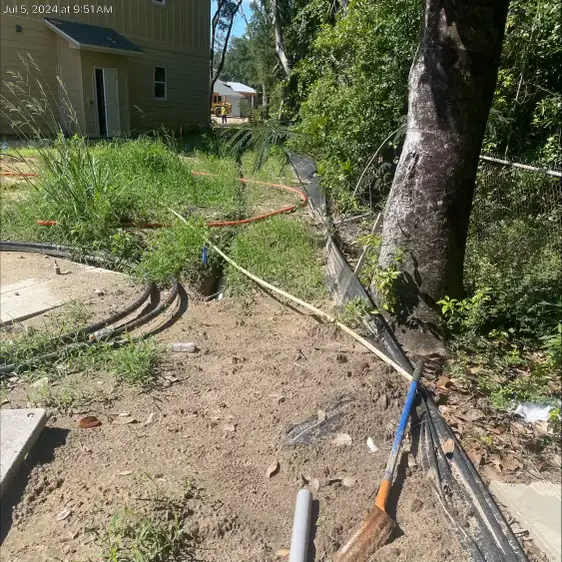
Installation involves trenching, pipe layout, valve placement, head installation, controller wiring, testing, backfill, and cleanup. Access matters, especially on fenced properties, tight side yards, finished lawns, and homes with existing paver patios or driveways. When irrigation is part of a larger landscape or hardscape project, sleeves should be placed before patios, walkways, or retaining walls block future access.
Valve boxes should be accessible for service. Heads should be placed where mowing and edging will not constantly damage them. Lines should be routed with future repairs in mind. These details are easy to overlook during a low-bid installation but make a major difference when the system needs adjustment years later.
Water Source and Pressure
Every irrigation install depends on available flow and pressure. The number of heads per zone, nozzle choice, pipe sizing, and controller programming all need to match the water source. Too many heads on one zone can create weak coverage. Too much pressure can mist water into the air instead of applying it to the soil. Pressure regulation may be needed in some layouts.
Properties using wells, municipal water, reclaimed water, or pump systems each have different considerations. A responsible estimate should account for those conditions before promising coverage. Testing and zone planning help avoid systems that look complete but perform poorly once multiple zones are running.
Integration With Landscaping
Irrigation works best when planned with plant selection, bed shape, sod installation, drainage, and lighting. Plant beds with drought-tolerant shrubs may need drip or targeted spray, while new turf needs broad even coverage during establishment. Drainage improvements may change where water collects. Lighting wire and irrigation lines also need to avoid conflicts.
Way's Lawn and Landscape handles irrigation as part of the whole outdoor system. That helps homeowners avoid paying for a sprinkler layout that has to be moved immediately after landscaping, sod, pavers, or lighting are installed. Coordinated planning saves labor and produces a cleaner finished property.
Startup, Testing, and Homeowner Handoff
The end of an irrigation install should include more than turning the controller on. Each zone needs to be run while the crew checks head direction, spray overlap, pressure, leaks, valve response, low-head drainage, controller labels, and whether water is landing on hardscape. Small adjustments at startup prevent the most common problems: dry strips between heads, overspray on driveways, misting from excess pressure, and water collecting against the house or patio.
We label zones in plain language so the homeowner knows what each program controls. A front turf rotor zone, a shaded side yard spray zone, and a drip bed zone should not be treated the same. New sod may need short, frequent watering at first, while mature shrubs may need deeper and less frequent watering. Explaining those differences helps prevent overwatering, fungus, runoff, and high utility bills.
Seasonal adjustment is also part of a responsible handoff. The schedule that protects new sod in July should not run unchanged through winter. Rain sensors and smart controllers help, but the owner still needs to understand how to pause watering after storms, adjust runtimes during drought, and recognize signs that a head has been damaged by mowing or edging.
After the system has run for a few weeks, a follow-up review can catch settling, newly visible dry spots, or plant material that needs a different nozzle pattern. This is especially useful when irrigation is paired with sod, drainage, planting, or outdoor living work because the landscape changes quickly during establishment. A good system is designed to be adjusted, serviced, and understood long after installation day.
Planning Questions
Yes, because rainfall is not evenly timed. Irrigation protects lawns and new plantings during dry stretches and lets water be applied in controlled zones instead of relying on unpredictable storms.
Yes. Existing lawns can be trenched and repaired. The amount of disruption depends on access, soil, root conditions, and layout complexity. A site visit helps set expectations.
Poor zoning is one of the biggest problems. Turf, shrubs, shade areas, and sunny beds often need different watering. Combining them on one schedule can cause dry spots in one area and overwatering in another.
Yes. Installing or adjusting irrigation before sod is ideal because the system can support establishment watering immediately and avoid cutting through new turf later.
Ready to Walk the Site?
Tell us about your property, timing, and goals. Way's Lawn and Landscape will follow up to schedule a free estimate.