
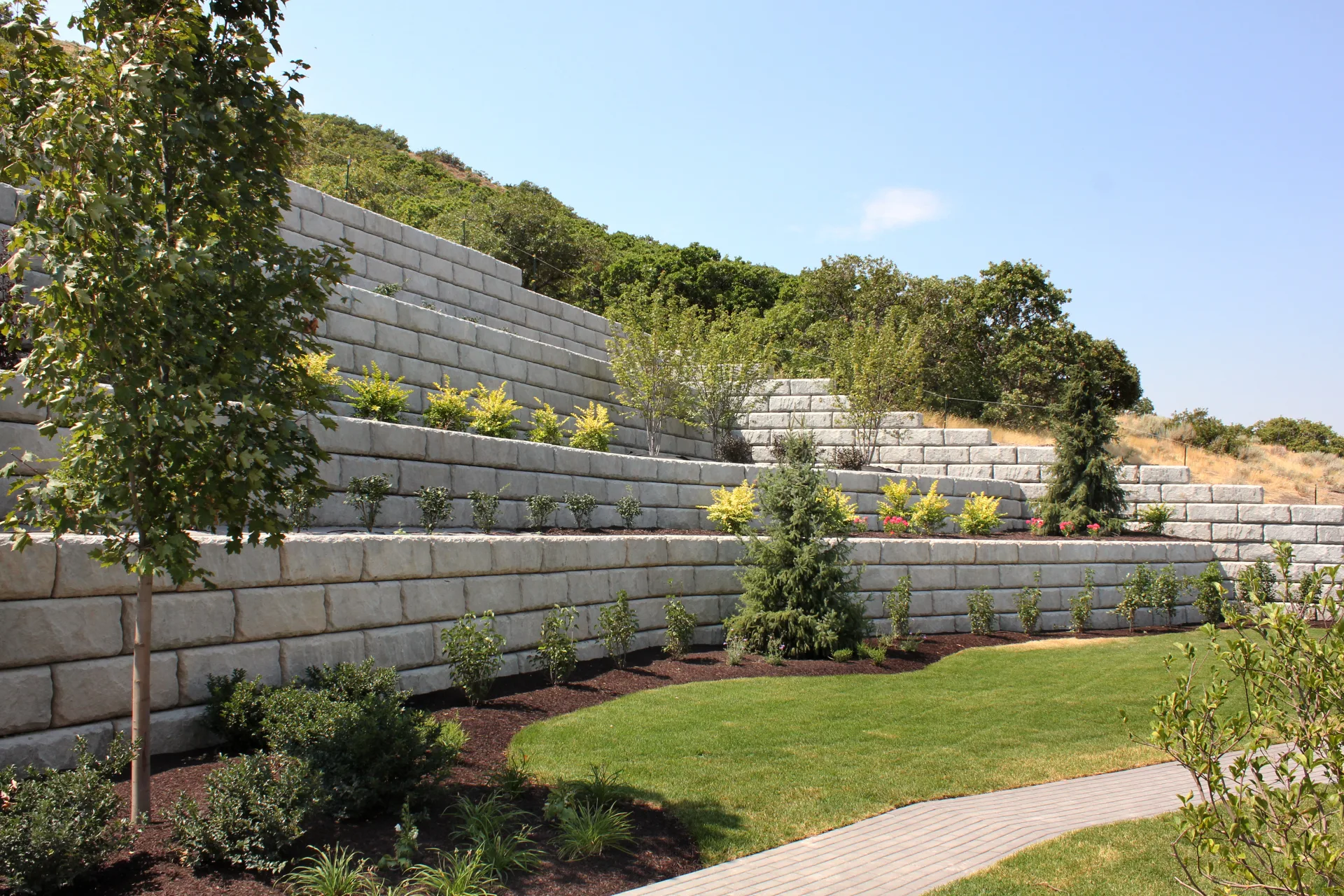
If your yard has a slope that is losing soil after every rainstorm, you probably need a retaining wall -- and the best time to build one in Northwest Florida is right now, before the heavy summer rains arrive in June. Pensacola averages 65 inches of rainfall per year, with roughly half of that falling between June and October in intense afternoon thunderstorms. Slopes and grade changes that seem manageable in spring can turn into serious erosion problems once 2 to 4 inches of rain falls in under an hour.
We build retaining walls across the Florida panhandle and Gulf Coast, and the pattern we see every year is the same: homeowners who address erosion and grading issues in April and May save thousands compared to those who wait until storm damage forces an emergency repair in July. Here are the five warning signs that tell you a retaining wall should be on your spring project list.
1. Visible Soil Erosion on Slopes
This is the most obvious sign, and the one homeowners in Pensacola, Gulf Breeze, and Navarre deal with most often. If you can see bare soil, exposed roots, or channels carved into a slope after rain, that soil is actively migrating downhill. Every storm removes more material, and the slope gets steeper and less stable over time.
Northwest Florida's soil profile makes this worse than in other parts of the state. Most of Escambia and Santa Rosa counties sit on deep sandy soil with minimal clay content. Sand drains fast but erodes easily -- it has almost no cohesion when saturated. A slope that holds fine in dry weather can lose inches of material during a single heavy downpour.
What to Look For
- Gullies or rills -- Small channels forming on the slope surface, especially where water concentrates from roof runoff or a neighbor's property
- Exposed tree roots -- If roots that were underground last year are now visible, that soil has eroded away
- Soil deposits at the base -- Fan-shaped piles of sand or mulch at the bottom of a slope mean material is washing down with every rain
- Plants leaning or falling -- Shrubs and small trees tilting downhill indicate the soil around their root balls is moving
A retaining wall stops this cycle by holding the slope in place with a structural face while a proper drainage system behind the wall handles water without moving soil. The result is a stable, level area above the wall and a clean transition below it.
2. Standing Water or Flooding at the Base of a Slope
When water pools at the bottom of a grade change for more than 24 hours after a storm, the grading on your property is not directing water where it needs to go. In many cases, the slope is funneling runoff into a low spot with no outlet. This is especially common in newer subdivisions around Pace, Milton, and the Pensacola suburbs where lot grading was done minimally during construction.
Standing water creates a cascade of problems: mosquito breeding, root rot in turf and plants, foundation moisture issues if the pooling is near your home, and soggy areas that stay unusable for days after rain. A retaining wall combined with a French drain or catch basin system can redirect water flow, eliminate the low spot, and create usable flat space where there was previously a muddy mess.
The Drainage Connection
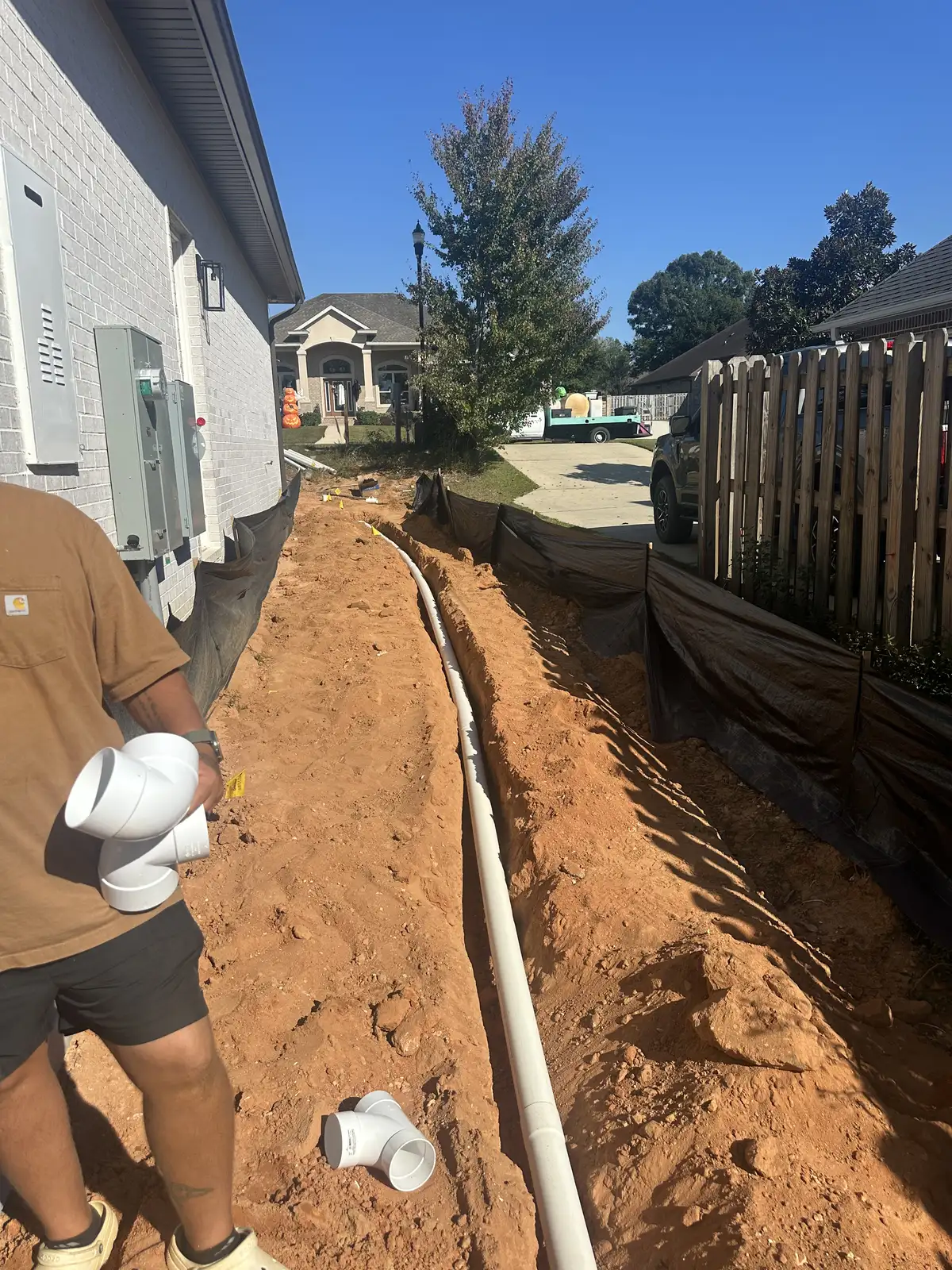
A retaining wall without proper drainage behind it will eventually fail. Water pressure (called hydrostatic pressure) builds up behind any wall that blocks water flow. That is why every retaining wall we build includes a gravel drainage layer, perforated pipe at the base, and filter fabric to keep fine soil from clogging the system. The wall holds the earth; the drainage handles the water. Both components are essential.
3. A Sloping Yard That Limits Your Usable Space
Not every retaining wall is about fixing a problem. Some of the most valuable walls we build are about creating opportunity. If your backyard slopes away from the house and you have always wanted a flat area for an outdoor living space, a paver patio, or even just a level lawn area for the kids, a retaining wall is what makes that possible.
This is a project we see frequently along the Gulf Coast, particularly on properties near the water in Destin, Santa Rosa Beach, and 30A where lots often have significant grade changes from the street to the back of the property. A tiered retaining wall system can turn an unusable hillside into two or three distinct flat areas -- a patio level, a lawn level, and a garden level, for example.
How Terracing Works
Instead of building one tall wall (which requires engineering, permitting, and significantly heavier construction), terracing uses two or three shorter walls to step the grade down gradually. Each terrace creates a flat, usable area. A 9-foot grade change, for instance, can be handled with three 3-foot walls rather than one 9-foot wall. The shorter walls are less expensive per linear foot, easier to build, and do not require the same level of structural engineering.
Terraced walls also look better. They create natural planting pockets between levels where you can add ornamental landscaping, accent lighting, or ground cover that softens the transition. The result is a property that feels intentionally designed rather than just "walled off."
4. Your Foundation Is Exposed or at Risk
This is the sign that requires the most urgency. If the soil around your home's foundation is washing away, exposing the slab or block, you have a structural issue that will get worse with every storm. Exposed foundations lose the lateral support that surrounding soil provides. In extreme cases, this leads to settling, cracking, and water intrusion into the home.
In Pensacola and the surrounding areas, we see this most often on properties where the home sits on a slight rise and the lot slopes away from the foundation. Over years of heavy rain, the soil that was graded against the foundation during construction erodes, and the gap between grade level and the foundation edge grows. A retaining wall 3 to 5 feet out from the foundation, combined with proper backfill and grading, restores that protective soil envelope and prevents further erosion.
Warning: Do Not Wait on Foundation Erosion
If you can see more than 6 inches of your foundation wall that should be below grade, get a professional assessment before the next major storm. Foundation repairs cost 5 to 10 times more than the retaining wall and regrading that would have prevented the problem. We offer free on-site evaluations for any property in our service area from Pensacola to Orange Beach.
5. An Existing Wall Is Leaning, Cracking, or Bulging
Retaining walls do not last forever, and the ones that were not built correctly fail much sooner. If you have an existing retaining wall that is leaning forward, has visible cracks wider than a quarter inch, or shows a noticeable bulge in the middle, it is not doing its job anymore and may be close to failure.
The most common causes of retaining wall failure in our area are:
- No drainage behind the wall -- Water pressure builds up behind walls without a gravel layer and drain pipe, eventually pushing the wall out
- Inadequate base preparation -- Walls built on uncompacted soil or without a proper gravel footing settle unevenly and crack
- Undersized for the load -- A wall that is too short or too thin for the amount of soil it is holding back will lean and eventually topple
- Timber rot -- Railroad tie and landscape timber walls in Northwest Florida typically last only 10 to 15 years before the wood deteriorates in our humid climate
- Tree root damage -- Large tree roots growing behind or under the wall can displace blocks and compromise the footing
Replacing a failed wall is almost always more expensive than building a new one, because the old wall has to be demolished and the disturbed soil behind it often needs to be excavated and recompacted. If your wall is showing signs of failure, addressing it now -- before a summer storm pushes it past the tipping point -- saves both money and the landscaping above and below the wall.
Retaining Wall Materials for Northwest Florida
Choosing the right material depends on the wall's purpose, your budget, and the look you want. Here is how the most common options compare for Gulf Coast conditions:
| Material | Cost/Sq Ft | Lifespan | Best For |
|---|---|---|---|
| Segmental Block | $25 - $45 | 50+ years | Most residential projects, terracing, garden walls |
| Natural Stone | $45 - $75 | 75+ years | High-end landscapes, visible focal-point walls |
| Poured Concrete | $30 - $60 | 50+ years | Tall structural walls, commercial applications |
| Landscape Timber | $15 - $25 | 10 - 15 years | Budget garden borders, temporary solutions |
| Boulder/Rip-Rap | $20 - $40 | Indefinite | Natural settings, waterfront erosion control |
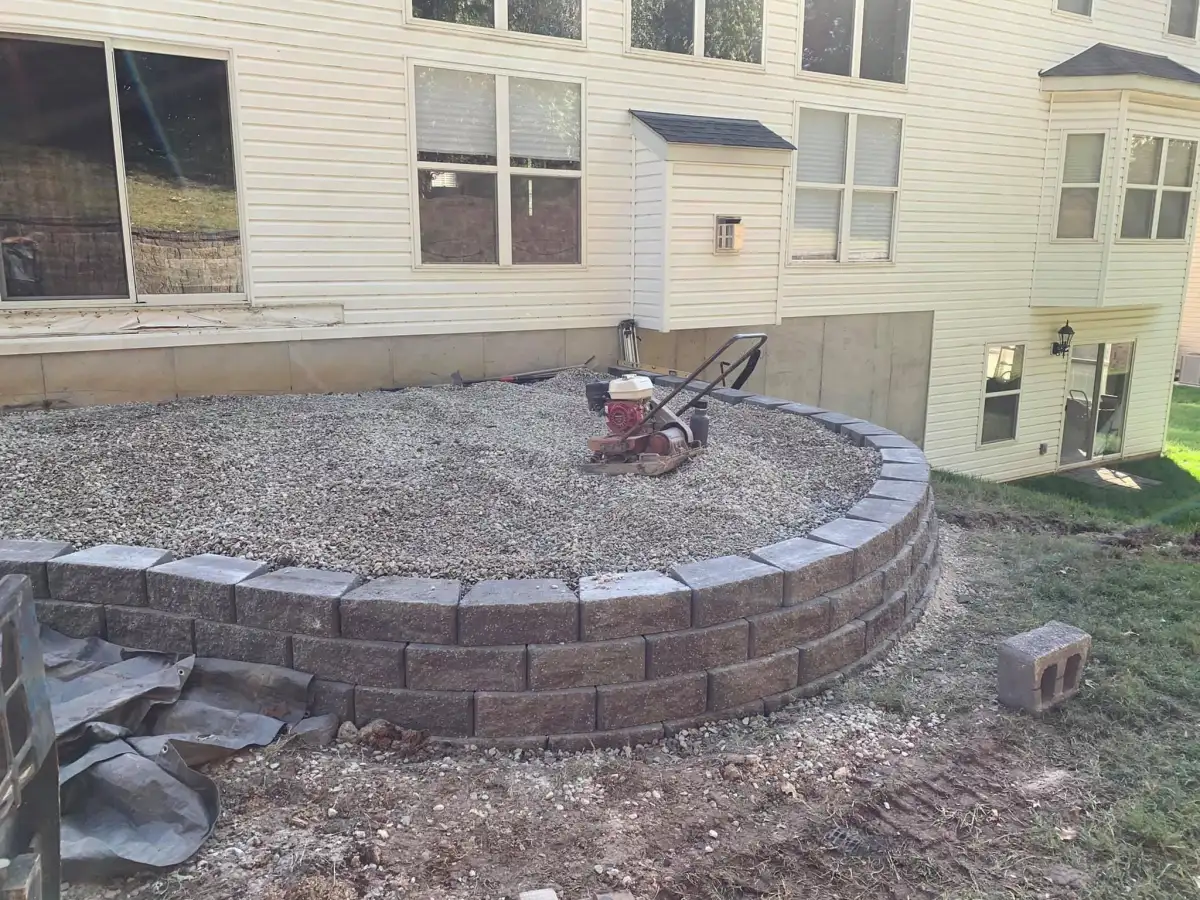
For most residential projects in Pensacola, Destin, and the surrounding Gulf Coast communities, segmental concrete block is the best balance of cost, durability, and appearance. Brands like Belgard, Pavestone, and Anchor offer a wide range of colors and textures that complement any home style, and the interlocking design provides structural strength without mortar.
Why Late Spring Is the Best Time to Build
There are practical reasons why May is the ideal month for retaining wall construction in our area:
- Ground conditions are workable -- The soil is dry enough for proper excavation and compaction but not yet saturated by daily summer storms
- Contractor availability -- Summer schedules fill up fast with storm damage repairs and emergency calls. Booking now means a shorter wait time and more scheduling flexibility
- Hurricane prep -- A properly built retaining wall protects your property during tropical weather. Completing it before hurricane season (June 1) means one less vulnerability on your property
- Landscaping establishment -- Any plantings added around the new wall have 4 to 6 weeks to root before summer heat stress. Plants installed in July struggle to establish in 95-degree temperatures
- Project drying time -- Base materials and backfill need time to settle and compact. Completing the wall before the rainy season gives everything time to set properly
Ready to Solve Your Erosion or Grading Problem?
We design and build retaining walls for residential and commercial properties across Pensacola, Gulf Breeze, Navarre, Milton, Pace, Destin, Fort Walton Beach, 30A, Santa Rosa Beach, and Orange Beach. Free on-site evaluations with a detailed written estimate.
Get Your Free EstimateFrequently Asked Questions
How much does a retaining wall cost in Pensacola?
Most residential retaining walls in the Pensacola area cost between $25 and $75 per square face foot installed, depending on the material. A typical 40-foot-long, 3-foot-tall wall runs $3,000 to $9,000. Segmental block walls sit at the lower end, natural stone walls at the higher end. Engineering requirements for walls over 4 feet add $1,500 to $3,000 for design and permitting.
Do I need a permit for a retaining wall in Escambia County?
In Escambia County, retaining walls over 4 feet tall (measured from the bottom of the footing to the top of the wall) require a building permit and engineered drawings. Walls under 4 feet generally do not require a permit unless they support a surcharge load like a driveway, structure, or slope above them. Santa Rosa County follows similar rules. Always check with your local building department before starting construction.
What is the best retaining wall material for the Gulf Coast?
Segmental concrete blocks (like Belgard or Pavestone) are the most popular choice for Gulf Coast retaining walls because they handle moisture well, resist salt air corrosion, and install faster than poured concrete or natural stone. For a more natural look, stacked stone or boulder walls work well but cost more. Treated timber walls are the most affordable option but only last 10 to 15 years in our humid climate before rotting.
How long does it take to build a retaining wall?
Most residential retaining walls in Pensacola take 3 to 7 days to complete, depending on length, height, and site conditions. A simple 30-foot decorative wall may take 2 to 3 days. A 60-foot structural wall with drainage, compacted base, and geogrid reinforcement can take a full week. Permitting for walls over 4 feet adds 2 to 4 weeks of lead time before construction begins.
Can a retaining wall fix yard flooding?
A retaining wall alone does not fix flooding, but it is often a critical part of a complete drainage solution. Walls redirect surface water flow, create level areas that drain properly, and prevent erosion that worsens flooding over time. When combined with French drains, catch basins, or regrading behind the wall, a retaining wall system can eliminate standing water and protect your foundation from moisture damage.