
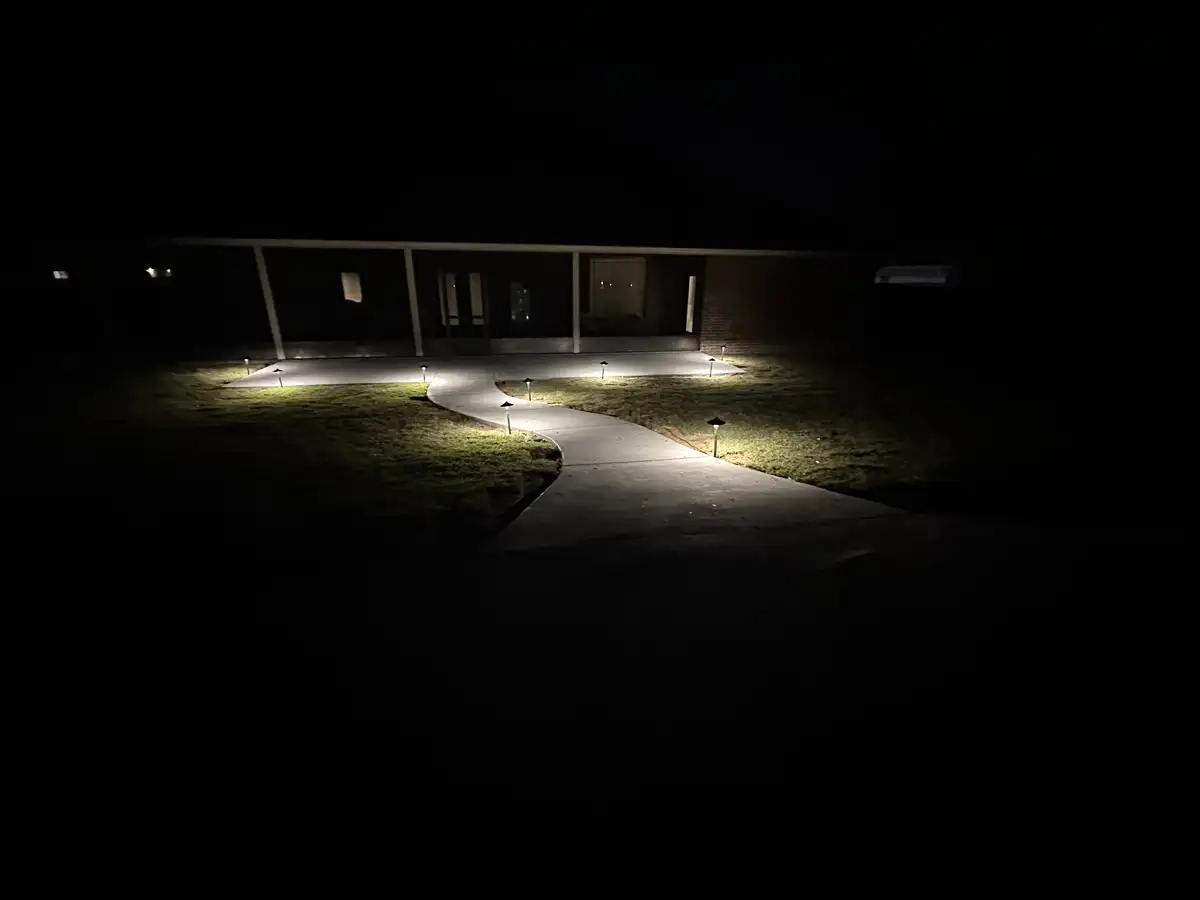
If you are searching for landscape lighting in Milton, FL, you are probably not just looking for pretty fixtures. Most homeowners want to know whether the system will make the property safer, whether the wiring can be added without tearing up the yard, how the lights will hold up through Northwest Florida rain and humidity, and what details should be settled before an estimate turns into a booked installation.
Milton properties vary more than many coastal service areas. A home near downtown Milton may need entry lighting, path lights, and uplighting for mature trees. A larger Santa Rosa County lot may need long wire runs, driveway visibility, irrigation coordination, and a plan for dark side yards. A backyard built around a paver patio or outdoor living space needs a different lighting plan than a front-yard curb appeal project. This guide answers the questions Milton homeowners usually ask before booking a landscape lighting.
The short answer: a good Milton landscape lighting plan should start with how the property works at night, then account for water, wiring, controls, future phases, and maintenance access. That is especially important when lighting is being paired with irrigation, drainage improvements, fresh landscaping, or a new outdoor living area.
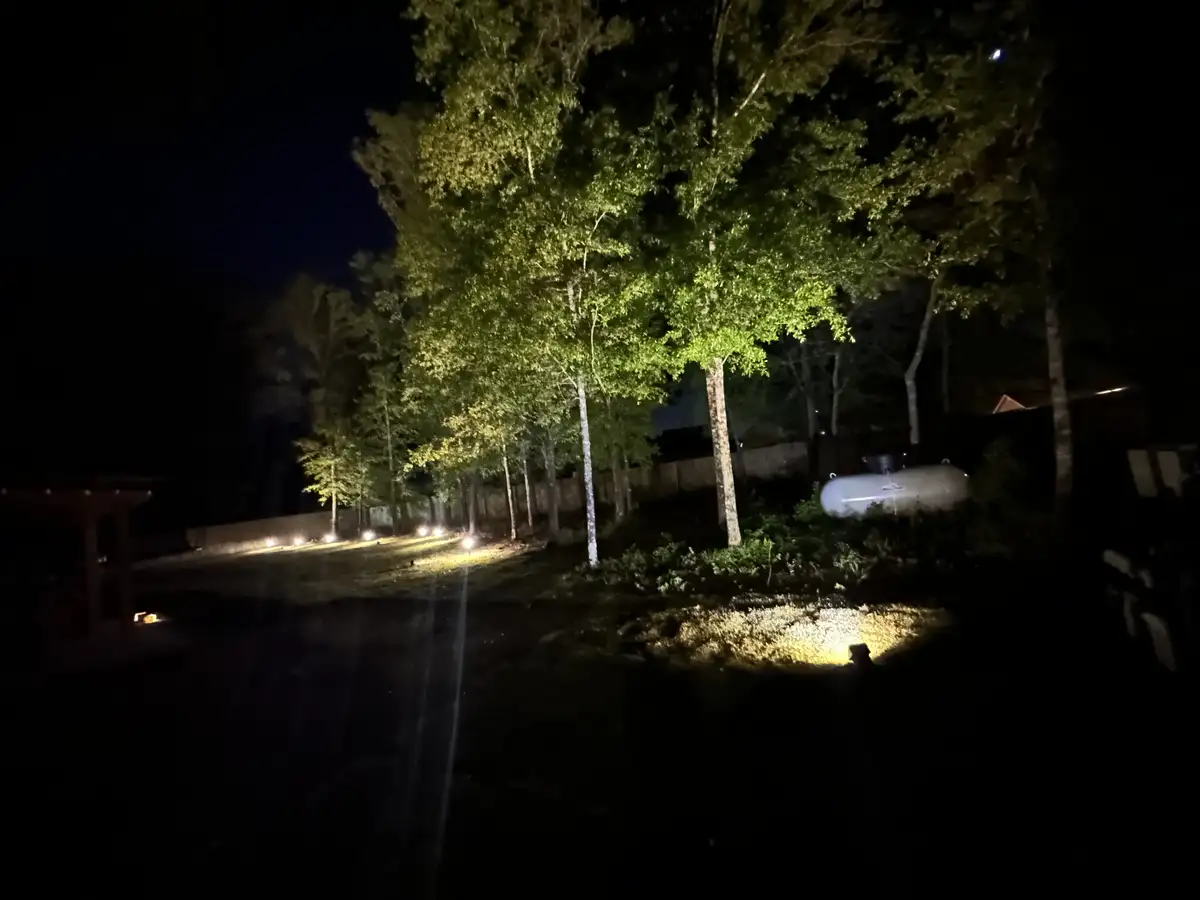
What should landscape lighting actually do?
Good landscape lighting should solve specific problems first, then add style. For a Milton home, the priorities usually fall into four categories: safer walking routes, better visibility near entries and driveways, usable outdoor space after sunset, and highlighting the landscape or architecture without glare.
That means the design should start with how you use the property. Where do guests park? Which walkway is hard to see at night? Are there steps, retaining edges, uneven pavers, or grade changes? Do you want the backyard patio to feel comfortable for dinner, or is the main goal a brighter front elevation? The answers determine fixture type, beam spread, spacing, and control zones.
How many lights does a Milton property need?
There is no fixed number that works for every yard. A small front-entry package may use several path lights, two or three uplights, and one transformer. A larger property can need separate front, side, driveway, and backyard zones. Fixture count depends on the distance from the transformer, the size of planting beds, the number of trees or architectural features worth highlighting, and whether outdoor living areas need task lighting.
The better question is not "how many lights can fit?" It is "where does light need to be controlled?" Too many fixtures can create glare, hot spots, and a commercial look. Too few can leave unsafe gaps. A site-specific layout gives each fixture a job, whether that job is marking a path, washing a wall, lighting a step, or giving depth to a tree canopy.
Can lights be added without damaging the lawn or beds?
Most low-voltage systems can be installed with minimal disturbance. Wiring is usually routed through planting beds, mulched areas, or shallow lawn trenches, then connected to a transformer near a suitable power source. The installer should look for irrigation heads, valve boxes, existing sleeves, root zones, hardscape edges, and future landscape plans before trenching.
This matters in Milton because many homes combine lawn, established beds, irrigation, and larger access routes. If you already have an irrigation system, the lighting layout should avoid spray directly hitting fixtures where possible and should not block service access to valves or heads. If you plan to add landscaping, drainage, or a patio later, it may be smarter to rough in sleeves or extra transformer capacity now. Homes in Pensacola face similar coordination needs, with added attention to coastal moisture and salt-air exposure.
What fixtures hold up best in Northwest Florida?
Milton is inland compared with beach communities, but fixtures still face heat, humidity, heavy rain, insects, irrigation overspray, and storm-season debris. Durable LED fixtures with weather-resistant finishes, direct-burial wire, and waterproof connectors are worth prioritizing. Cheaper fixtures may look fine on day one but can fail early when connections take on moisture or housings corrode.
For tree uplighting and architectural accents, adjustable spot or well lights are common. For walkways, path lights should cast light downward without shining into eyes or windows. For seat walls, steps, and patio edges, low-profile hardscape lights can provide safety without cluttering the space. The right fixture is the one that fits the use, the location, and the maintenance realities of the property.
Should the system use a timer, photocell, or smart controls?
Most homeowners want the system to run automatically. Astronomical timers are popular because they adjust to sunset and sunrise throughout the year. Photocells turn lights on when it gets dark, which is simple, but they can be affected by nearby light sources or placement. Smart transformers can add app control, dimming, and zone schedules for homeowners who want more flexibility.
Before booking, ask how you will control the system and whether the transformer has room to add fixtures later. If the first phase is front-yard lighting but the future plan includes a backyard patio or outdoor kitchen, a slightly larger transformer or a cleaner zone plan can save rework.
How does drainage affect lighting?
Lighting and water management should be planned together. Low areas, downspout discharge points, and drainage paths are not ideal places for connections or fixtures. A beautiful uplight does not help if it sits in a spot that stays saturated after summer storms. On properties with recurring washout, it may be wise to address drainage solutions before installing wiring through the same area.
For homes near larger lots, wooded edges, or sloped areas, the estimate should include a practical walk-through after dark goals and daytime site conditions are both understood. Soil movement, mower routes, mulch depth, and water flow all affect how long the installation stays clean and serviceable.
What should happen during the estimate?
A useful lighting estimate should include more than a fixture count. Expect the contractor to walk the property with you, identify the main use areas, look for power access, check likely wire routes, discuss controls, and talk through fixture placement. For a Milton property, it is also worth discussing driveway length, dark side yards, irrigation layout, existing patios, drainage patterns, and whether future landscaping will change the plan.
You should leave the estimate knowing what areas are being lit, what type of fixtures are recommended, where the transformer will go, how the system will turn on and off, what parts of the yard will be disturbed during installation, and what work may be better handled first. If the project touches a patio, retaining edge, or outdoor living area, ask whether lighting should be installed alongside that work instead of after it.
Ready to plan landscape lighting in Milton?
Way's Lawn and Landscape LLC designs and installs low-voltage landscape lighting for Milton and the surrounding Gulf Coast service area. Share your goals, photos, and address so we can recommend the right next step.
Request a Free EstimateFrequently Asked Questions
How much does landscape lighting cost in Milton FL?
Cost depends on fixture count, wire run length, transformer size, controls, trenching access, and whether the system is lighting a small entry, a patio, or several zones across a larger property. A clear estimate should itemize the layout and explain what can be phased later.
Can landscape lighting be installed on an existing yard?
Yes. Low-voltage lighting can usually be added to existing planting beds, lawns, patios, walkways, and outdoor living areas with limited disturbance. The layout should be checked against irrigation, drainage, roots, and future landscape work before installation begins.
Will landscape lights interfere with irrigation?
They should not when the systems are coordinated. Fixture placement should account for sprinkler spray, valve access, drip lines, and wire routes. If irrigation repairs or upgrades are planned, mention that during the lighting estimate.
What color temperature is best for outdoor lighting?
Warm white light is usually the best choice for residential landscapes because it feels natural and flattering on plants, hardscape, and home exteriors. Very cool white light can feel harsh in outdoor living areas and may create more glare.