
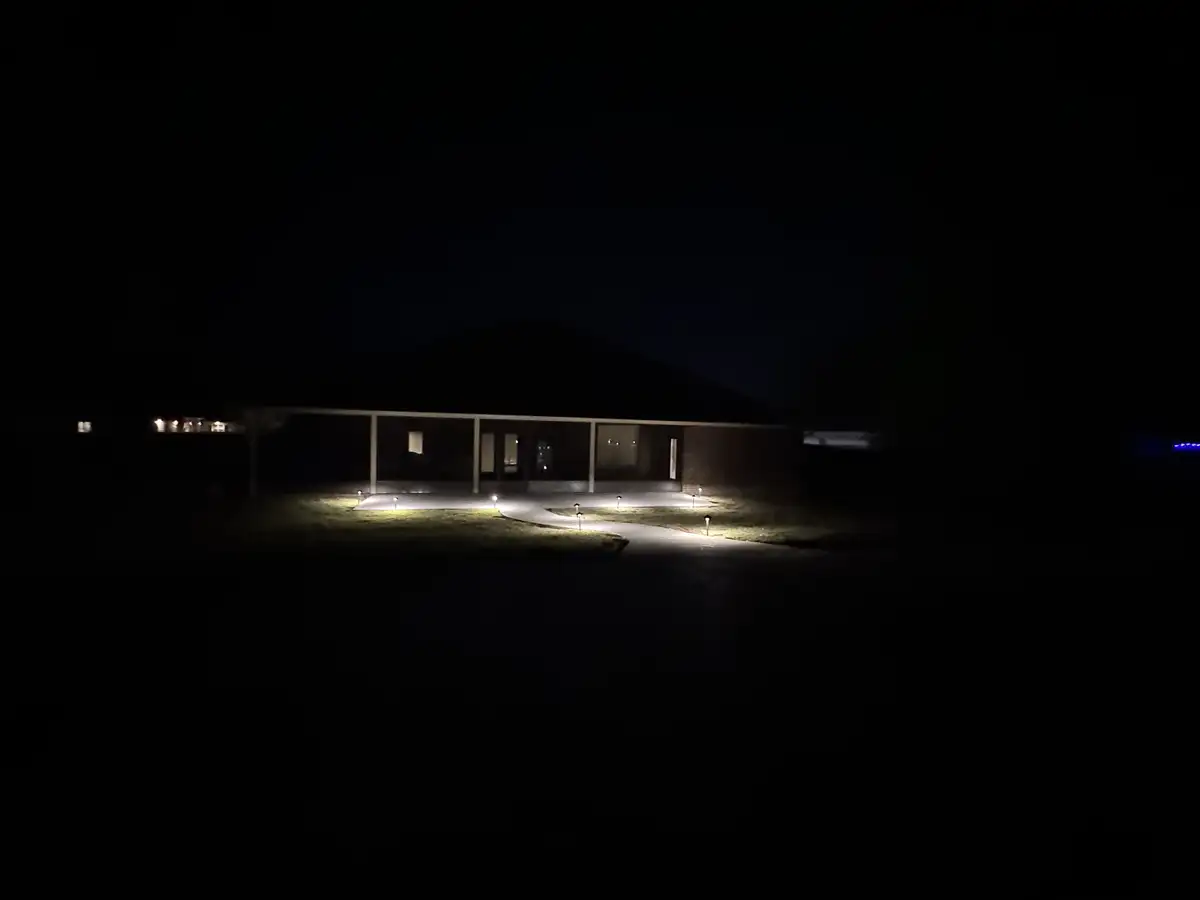
Good landscape lighting makes a Destin property easier to use after sunset without flattening the yard under too much light. The plan has to balance paths, entries and outdoor gathering areas with glare control, coastal exposure, drainage and the existing landscape.
Before booking, compare the thinking behind each proposal—not only the number of fixtures. Way's Lawn and Landscape LLC provides landscape lighting and serves homeowners throughout the Destin service area. Use the questions below to prepare for a site visit and understand what should be clear in an estimate.
What should the lighting solve first?
Walk the property after dark and identify three types of priorities: places where people move, areas where people gather and features you want to see. Entry steps, driveway edges and side gates are practical needs. Patios and outdoor kitchens need comfortable light for conversation and movement. Palms, planting beds and architectural details are accent opportunities.
This short list is more useful than asking for a fixture count. It tells the designer which areas matter most and which can wait for a later phase. A clear priority order also makes it easier to compare two proposals that use different fixture types or quantities.
How should coastal exposure affect fixtures and connections?
Destin lighting lives with humidity, frequent rain, irrigation spray and, on more exposed properties, salt carried through the air. Ask what fixture materials and finishes are being proposed, why they suit each placement, and how connections will be protected while remaining accessible for service.
Do not treat every location the same. A covered entry, an open bed near the street and a fixture close to regular irrigation may face different exposure. The estimate should make the product level and installation assumptions clear enough that you can compare more than appearance alone.
Where do water, swales and irrigation change the route?
The City of Destin's stormwater guidance explains that runoff from roads, lawns and common areas may move into shallow graded swales, including swales on public or private property. During the site visit, identify swales, low spots, drain paths, irrigation lines, valve boxes and areas that stay wet after rain.
Those conditions can affect fixture placement, cable routing and future service access. If the property also needs irrigation or drainage solutions, ask which work should happen first. Coordinating the systems can reduce trenching through finished beds and avoid placing a connection where water repeatedly collects.
Who is responsible for the electrical scope and permits?
Ask who will handle the transformer, wiring and any connection to the home's electrical system. The Florida Department of Business and Professional Regulation says low-voltage landscape lighting installation generally requires an appropriate license unless it fits a narrow exemption for a factory-installed cord-and-plug system that does not modify a structure's wiring.
The exact scope matters. Before work begins, confirm who is responsible for licensed electrical work and whether the property requires a permit or local review. If lighting approaches a pool or involves an older electrical system, bring that up early so the correct qualified professional can evaluate it.
How will the design prevent glare?
A fixture can reach the right surface and still be uncomfortable if the bright source is visible from a chair, bedroom window or approaching vehicle. Ask the designer to consider the view from the driveway, front entry, main indoor rooms and patio seating—not only the view from the street.
Path lights do not need to form a rigid runway, and every palm or wall does not need the same brightness. Shielding, fixture position, beam spread and careful aiming help keep the light on its intended target. See more examples in our guide to landscape lighting ideas for Gulf Coast homes.
Will the controls support daily use and future phases?
Ask how the system turns on and off, whether practical and entertaining areas can operate separately, and where the transformer and controls will be located. These components should be accessible without becoming a visual distraction.
If you expect a future paver patio, outdoor kitchen, planting phase or driveway change, mention it before routes and capacity are set. Planning for a possible second phase can influence transformer sizing, zones and cable paths even when those future fixtures are not part of today's estimate.
What maintenance and follow-up should you expect?
Landscape lighting is not completely maintenance-free. Plant growth can block a beam, mulch can cover a low fixture, irrigation can shift, lenses can collect residue and fixtures may be bumped during yard work. Ask what the homeowner should inspect, how often aiming may need adjustment and who to call if a zone flickers or stops working.
Also ask what warranty applies to fixtures, the transformer, controls and installation work, and what is excluded. Warranty terms should be written rather than assumed. A serviceable layout keeps fixtures and connections reachable when routine cleaning, aiming or troubleshooting is needed.
What should the estimate make clear?
A useful estimate should identify the areas being lit, fixture types and quantities, transformer and controls, cable-routing assumptions, installation and restoration work, optional phases, warranty terms and exclusions. If existing fixtures will be reused, removed or repaired, that should be written into the scope.
Ask why the layout matches your priorities and whether nighttime aiming or adjustment is included. Two estimates with similar fixture counts may cover different areas, materials or control plans. Clear scope helps you compare the finished result instead of comparing a single per-fixture number.
Planning landscape lighting for a Destin property?
Tell Way's Lawn and Landscape LLC which entries, walks, patios, palms or outdoor areas matter most after dark. We can review the property and prepare a site-specific estimate.
Frequently Asked Questions
What is the rule of thumb for outdoor lighting?
Start with the areas people use after dark, keep visible light sources out of normal sightlines and give every fixture a specific job. A layered plan is more useful than an even row or a preset fixture count.
Do you need a license to install landscape lighting in Florida?
Florida DBPR says a license is generally required for low-voltage landscape lighting installation unless the work fits the narrow factory-installed cord-and-plug exemption. Ask who is responsible for the electrical scope and confirm any permit requirements for the property before work begins.
What are the main safety considerations for landscape lighting?
The plan should account for wet-location equipment, protected and accessible connections, cable routes around irrigation and drainage, glare near walks and drives, and any pool or line-voltage work that needs qualified electrical coordination.
Does landscape lighting increase home value?
Landscape lighting can improve nighttime usability and curb appeal, but no contractor can promise a specific increase in resale value. Plan the system around the property and the way you use it rather than an unsupported return-on-investment claim.
What should a landscape lighting estimate include?
The estimate should identify lighting priorities, fixture types and quantities, transformer and controls, cable-routing assumptions, installation and restoration work, optional phases, warranty terms and exclusions.
Does Way's Lawn and Landscape provide landscape lighting estimates in Destin, FL?
Yes. Way's Lawn and Landscape LLC serves Destin and provides landscape lighting estimates. Homeowners can use the contact form or call (850) 791-2199 to request a site visit.