
The most useful forestry mulching plan describes the result you want, not just the acreage. A walkable route through brush, an accessible fence line and an open understory around selected trees have different treatment limits. Decide how you want to use your land before choosing how much vegetation to remove.
For landowners in Milton, Pace and nearby communities, Way's Lawn and Landscape LLC offers forestry mulching. Use the decisions below to prepare for a site conversation about access, retained vegetation and the surface you expect afterward.
Set boundaries and identify what stays
Separate your property boundary from the boundary of the work. You may want only a path, a strip beside a fence or selected sections treated. Use a sketch to explain those limits, then walk them with the estimator where it is safe to do so. Resolve uncertain property lines before treating an edge; an old fence or a rough map should not settle a boundary question.
Point out individual trees, shrubs and screening you want to retain. Describe the vegetation, not just its general location: “keep this row along the neighbor's fence” is clearer than “leave some privacy.” Agree on how retained areas will be identified and how equipment will avoid them. Tree spacing can affect which areas are reachable without damage.
Check the whole equipment route
A wide entrance does not guarantee a usable route to the brush. Note the narrowest gate opening, sharp turns, overhead obstructions, slopes and soft ground between the road and the treatment area. Show where vehicles can arrive and turn without crossing areas you want protected. Let the contractor confirm the clearance needed for the equipment proposed; there is no useful gate-width promise without knowing the machine.
Describe places that stay wet after rain, along with ditches, crossings and ground you are unsure will support equipment. The USDA Forest Service's site-evaluation guidance identifies slope, soil vulnerability and the treatment objective as important factors in deciding whether mastication fits a site. Ask what conditions would change the access plan or require rescheduling.
Identify utilities and hidden obstacles
Share what you know about irrigation, septic components, private electrical lines, old fence wire and dumped material. Do not assume dense vegetation contains only plants, or that the absence of a visible utility marker means the ground is clear.
Sunshine 811's private-facility guidance explains that member utilities mark the facilities they own and maintain. Private systems, including irrigation and electricity to outbuildings, need separate attention. Discuss the proposed work, any locating needs and private-line responsibilities before equipment enters. If later work involves digging, coordinate the appropriate 811 process for that work too.
Agree on the material and finished surface
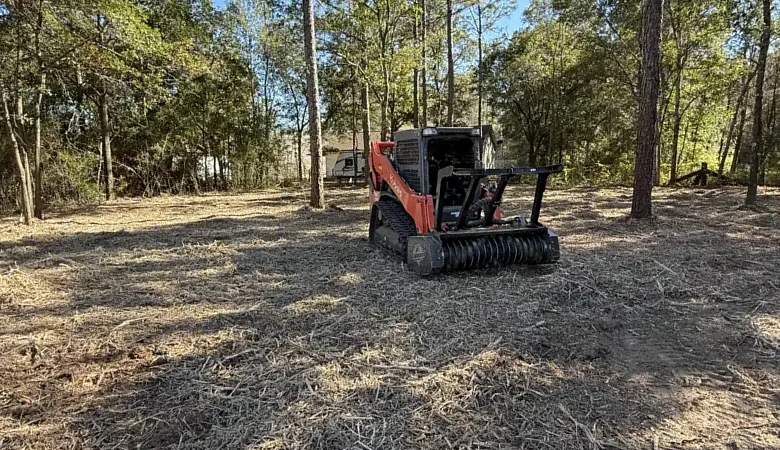
Forestry mulching processes vegetation into material that remains on the ground. Ask what the proposed treatment will leave: the texture and distribution of woody debris, any remaining stumps or roots, and vegetation beyond the agreed machine scope. Discuss larger trees or non-vegetative debris separately rather than assuming they are included.
A mulched understory and a lawn-ready surface are different outcomes. If your eventual goal is sod, a new planting area or another outdoor feature, say so at the start. Have any additional preparation assessed separately. Mulching alone should not be treated as a promise of grading, stump removal, hauling or a finished construction surface.
Plan follow-up around the way you will use the land
Review the treated area against the agreed boundaries and retained vegetation when the work is complete. Before regular use, discuss any remaining woody projections, uneven ground or other obstacles. Keep the access route and treatment sketch for future maintenance decisions.
Watch for returning brush rather than expecting permanent control from one pass. The University of California's mastication guidance notes that some trees and shrubs can resprout after treatment. The appropriate follow-up depends on what grows back and whether you want a wooded understory, an accessible path or a different finished landscape. Discuss options when regrowth appears; avoid assuming a fixed maintenance interval fits every site.
Forestry mulching planning questions
What should I decide before requesting a forestry mulching estimate?
Identify the area you want treated, the vegetation you want to retain, how equipment can reach it and how you want to use the ground afterward. Share known utilities, buried debris and wet areas, then agree on the treatment limits and finished condition before work starts.
Does forestry mulching leave the ground ready for sod?
A mulched surface is not the same as a prepared lawn base. Woody material and remaining stumps or roots may affect the next step. If you want sod, discuss that goal before mulching and have any additional preparation assessed and priced separately.
Will an 811 request identify every buried line in my yard?
No. Sunshine 811 explains that member utilities mark facilities they own and maintain; private facilities are not included in its database. Irrigation, septic components and private electrical or lighting lines need separate attention. Discuss private locating needs before equipment enters the work area.
Will brush grow back after forestry mulching?
It can. Some woody plants resprout after their above-ground growth is cut. Plan to monitor the treated area and discuss follow-up appropriate to the vegetation and your intended use, rather than assuming one pass provides permanent control.
Talk through your forestry mulching plan
Tell Way's Lawn and Landscape LLC where your land is, what you want to open up and which trees or screening you want to keep. Include photos of the entrance and vegetation, approximate treatment limits and your intended use afterward so the conversation starts with your actual site.