
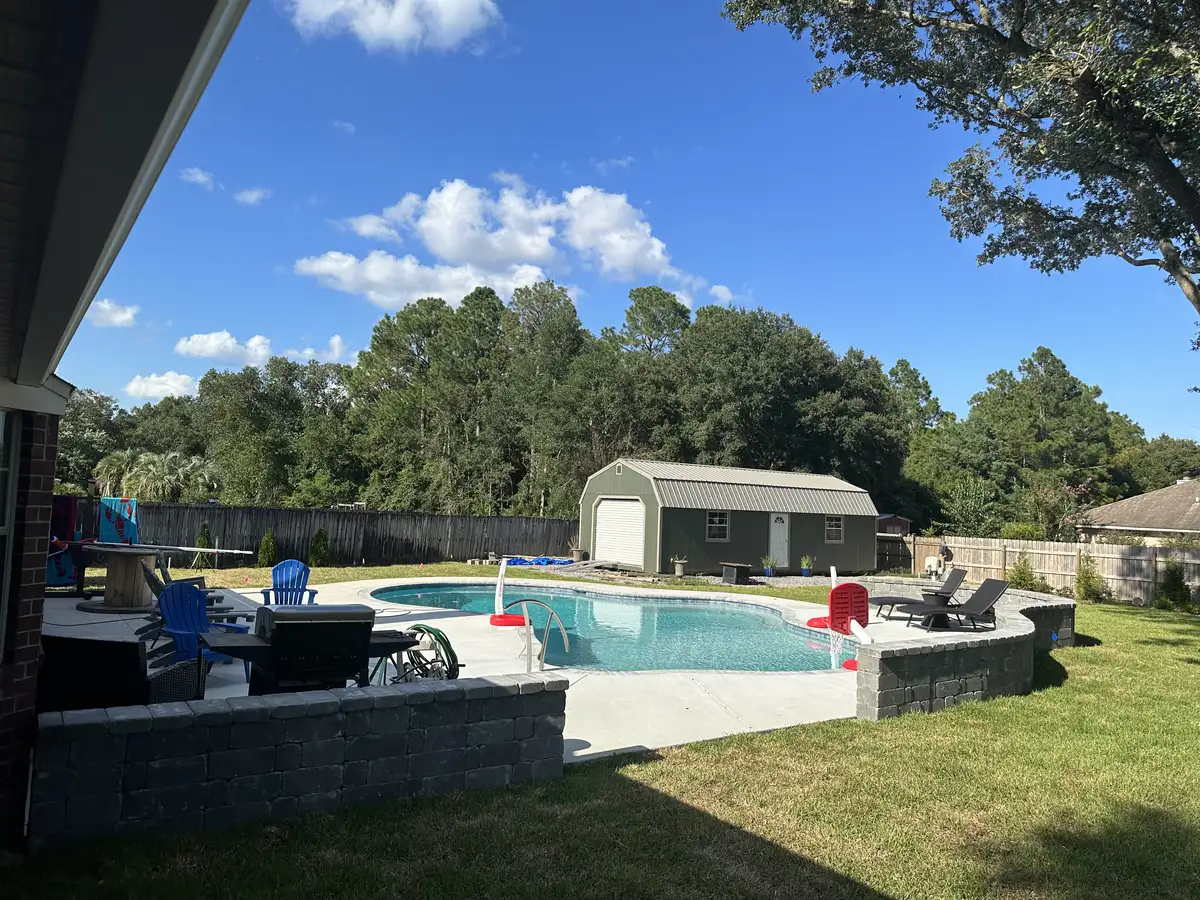
An outdoor kitchen is the single highest-value addition you can make to an outdoor living space in Northwest Florida. It extends your usable living area, reduces indoor cooking heat during the hottest months, and -- when built with the right materials and layout -- adds measurable resale value to Gulf Coast properties. The typical return on investment for a well-designed outdoor kitchen in Florida ranges from 55 to 75 percent at resale, according to remodeling industry data.
But an outdoor kitchen on the Gulf Coast is not the same project as one built in a dry, temperate climate. Pensacola averages 65 inches of rain per year. Salt air corrodes cheap metals within a single season. Humidity promotes mold on porous surfaces. And summer temperatures routinely exceed 90 degrees from June through September, which means shade and airflow are not luxuries -- they are functional requirements.
This guide covers the layout options, material selections, cost expectations, and design decisions that matter specifically for outdoor kitchens along the Florida panhandle and Alabama Gulf Coast.
Layout Options: Which Configuration Fits Your Property?
The layout you choose depends on your available space, how you cook, and how many people you typically entertain. Here are the four most common configurations for Gulf Coast properties.
Straight-Line (Single Wall)
A straight-line kitchen places the grill, countertop, storage, and optional sink along a single wall. This is the most space-efficient layout and works well on covered porches, narrow patios, and properties where the outdoor kitchen backs up against a house wall or privacy fence. Typical length is 8 to 12 feet. It is also the most affordable configuration because it requires the simplest utility runs for gas, water, and electrical.
L-Shape
An L-shaped layout wraps around a corner, creating a natural division between the cooking zone and the serving or prep zone. This is the most popular configuration for Gulf Coast homes because it provides enough counter space for serious cooking while keeping the cook facing guests. The L-shape also works naturally with a paver patio design, where the kitchen anchors one corner of the entertainment area.
U-Shape
A U-shape encloses the cook on three sides, providing maximum counter and storage space. This layout is ideal for homeowners who entertain frequently or want multiple appliances -- grill, smoker, side burner, and beverage station. It requires more square footage (typically a 10-by-10-foot minimum footprint) and higher utility costs, but it delivers a true chef-grade outdoor cooking experience.
Island
A freestanding island is a standalone unit that can be placed anywhere on your patio or deck. It typically includes a built-in grill and countertop with storage underneath. Islands work well when you want flexibility in placement or have an existing paver patio where you do not want to build against a wall. The trade-off is that utility connections -- gas, water, and electrical -- must run underground to the island location, which adds to installation cost.
Materials That Survive Gulf Coast Weather
Material selection is where most outdoor kitchen mistakes happen in coastal Florida. What works in Arizona or Georgia does not necessarily hold up in Pensacola's combination of salt air, 80-percent humidity, and 65 inches of annual rainfall.
Base Structure: Concrete Block, Not Wood
The structural frame of your outdoor kitchen should be concrete block (CMU) with a stone, brick, or stucco veneer. Wood framing is cheaper upfront but creates problems in Northwest Florida's climate: termites, moisture absorption, and rot. Concrete block resists all three, supports heavy granite countertops without sagging, and provides a noncombustible structure around gas-burning appliances. This is a durability decision you cannot afford to shortcut on the Gulf Coast.
Countertops: Granite, Quartz, or Concrete
For outdoor countertops in Pensacola and the surrounding area, three materials perform reliably.
Granite is the most popular choice. It handles heat from pots and pans, resists UV fading, and does not absorb moisture when properly sealed. Expect to reseal granite countertops once per year in Florida's climate. Cost: $50 to $100 per square foot installed.
Quartz (engineered stone) offers a uniform appearance and requires zero sealing. The downside is that some quartz products can discolor with prolonged direct UV exposure. If your outdoor kitchen is under a covered roof or pergola, quartz is an excellent option. If it is fully exposed, ask your installer about UV-rated quartz specifically. Cost: $60 to $120 per square foot installed.
Concrete countertops are cast to your exact dimensions and can be colored, stamped, or textured to match your patio pavers. They are durable and heat-resistant but require periodic sealing -- every 6 to 12 months in a Gulf Coast environment. Cost: $65 to $135 per square foot installed.
Appliances: Marine-Grade Stainless Steel
Standard 304-grade stainless steel is acceptable for outdoor kitchens that are under a covered roof and set back from the waterfront. For properties on Pensacola Beach, Gulf Breeze, Orange Beach, or any location within a mile of salt water, invest in 316 marine-grade stainless steel. The cost premium is typically 15 to 25 percent, but 316-grade resists pitting and corrosion that will destroy 304-grade appliances within two to three years of coastal exposure.
Must-Have Features for a Gulf Coast Outdoor Kitchen
The best outdoor kitchens are planned around how your family cooks, hosts, and handles Gulf Coast weather. These features make the biggest difference for Northwest Florida homeowners.
Built-In Grill
The grill is the centerpiece of any outdoor kitchen. For Gulf Coast use, a built-in natural gas grill eliminates the hassle of propane tank swaps and provides consistent heat. Look for at least 60,000 BTUs across three or four burners, a rear infrared rotisserie burner, and a stainless steel construction rated for outdoor use. Budget range: $1,500 to $5,000 for the grill unit alone.
Covered Roof or Pergola
This is not optional on the Gulf Coast. An outdoor kitchen without a roof is unusable during Pensacola's frequent summer rain showers and uncomfortable in direct afternoon sun from May through September. A solid roof (not a fabric canopy) protects your appliances from rain, UV damage, and falling debris during storms. A pergola with a polycarbonate or metal roof panel is a cost-effective solution that provides rain protection while allowing airflow. Factor in $5,000 to $15,000 for a properly built cover structure.
Ventilation and Fan
Airflow matters more in a humid, hot climate than in dry ones. A ceiling fan rated for wet locations keeps the cooking area comfortable and pushes smoke away from the seating area. If your kitchen is under a solid roof, consider a vent hood above the grill to prevent grease buildup on ceiling materials.
Lighting
The Gulf Coast's long summer evenings (sunset around 7:45 PM in June) mean outdoor kitchens get heavy use after dark. Task lighting above the grill and prep areas is essential for safe cooking. Ambient landscape lighting around the perimeter creates atmosphere for evening entertaining. LED fixtures rated for wet locations are the standard -- they resist corrosion, use minimal electricity, and last 50,000 hours or more.
Sink and Running Water
A sink with hot and cold water eliminates trips inside for hand washing, food prep, and cleanup. It requires a water supply line and a drain line (connected to your home's plumbing or a separate dry well, depending on your local code). In Escambia and Santa Rosa counties, a plumbing permit is required for outdoor water connections. A licensed contractor handles the permit and ensures code-compliant installation.
Outdoor Kitchen Costs in Pensacola and Northwest Florida
Outdoor kitchen costs vary widely based on size, materials, and appliance quality. Here are realistic ranges for the Pensacola market based on actual project experience.
Basic grill station (straight-line, 6-8 feet): $8,000 to $15,000. Includes built-in grill, concrete block base with stucco veneer, granite countertop, and basic electrical for lighting. Does not include a cover structure.
Mid-range kitchen (L-shape, 10-14 feet): $15,000 to $30,000. Adds a sink with running water, additional counter space, storage drawers, a beverage cooler, and task lighting. May include a pergola or partial roof.
Full custom kitchen (U-shape or island, 14+ feet): $30,000 to $60,000+. Includes premium appliances (grill, smoker, side burner, warming drawer), full roof structure, bar seating, integrated landscape lighting, and a dedicated paver patio foundation.
These ranges include design, materials, labor, and utility connections. They do not include a new patio surface (if one does not already exist) or major drainage work that may be needed on some properties.
Design Tips Specific to the Florida Panhandle
Orient the Kitchen Away from Prevailing Winds
Pensacola's prevailing winds come from the south and southwest during summer. Position your grill so smoke blows away from -- not toward -- the primary seating and dining area. If your patio faces south, place the grill on the east or west end of the layout rather than the center.
Plan for Storm Season
Hurricane season runs June 1 through November 30. Built-in appliances with stainless steel covers survive storm winds better than freestanding grills. If your kitchen includes a pergola, ensure the posts are anchored to concrete footings that meet Florida's wind load requirements (typically 140 mph design wind speed in Escambia County). Removable cushions and lightweight accessories should have indoor storage designated for storm prep.
Include Drainage in the Design
An outdoor kitchen built on a flat patio without proper drainage will puddle during every rainstorm. The patio surface should slope slightly (1 to 2 percent grade) away from the kitchen structure. If the kitchen is at a low point on the property, install a channel drain along the front edge to carry water away. Addressing drainage during construction costs a fraction of what it costs to fix after the fact.
Use Insect-Resistant Materials
Mosquitoes and no-see-ums are a reality of Gulf Coast living from April through October. Ceiling fans at the cooking and seating areas create enough airflow to keep flying insects at bay. Avoid open wood framing that attracts termites and carpenter ants. Concrete block, stone, and metal are your allies.
When to Build Your Outdoor Kitchen
The best time to start an outdoor kitchen project in Northwest Florida is late winter through mid-spring (February through May). This gives your contractor a construction window before the heavy summer rainy season begins in June, and your kitchen is ready for entertaining by Memorial Day or the Fourth of July. Starting in late May still works -- most outdoor kitchen projects take 2 to 4 weeks to complete -- but scheduling gets tighter as summer approaches.
If you are planning a larger outdoor living project that combines a kitchen with a new paver patio, retaining wall, and landscape lighting, plan for a 4- to 8-week build timeline and start the consultation process at least 6 weeks before your target completion date.
Frequently Asked Questions
How much does an outdoor kitchen cost in Pensacola?
A basic outdoor kitchen in Pensacola typically costs $8,000 to $15,000 for a grill station with countertop, storage, and basic utilities. Mid-range kitchens with appliances, a sink, and lighting run $15,000 to $30,000. Full custom outdoor kitchens with premium materials, multiple appliances, and a bar or dining area start around $30,000 and go up from there.
What materials work best for outdoor kitchens on the Gulf Coast?
Stainless steel (304 or 316 marine-grade) is the best choice for appliances and hardware in coastal areas. For countertops, granite, quartz, and concrete handle Florida's heat and humidity. For the base structure, concrete block with stone or stucco veneer resists moisture and insects better than wood framing.
Do I need a permit to build an outdoor kitchen in Escambia County?
Yes. Escambia County requires a building permit for permanent outdoor kitchen structures, especially those with gas lines, electrical wiring, or plumbing. If the kitchen includes a roof or pergola structure, that may require a separate structural permit. A licensed contractor handles the permit process as part of the project.
Start Planning Your Outdoor Kitchen
An outdoor kitchen transforms how you use your property. In Northwest Florida's climate, where you can cook and entertain outdoors 10 months of the year, it is one of the highest-impact improvements you can make -- and one that your family will use almost daily.
Way's Lawn and Landscape designs and builds complete outdoor living areas -- including outdoor kitchens, paver patios, lighting, and landscaping -- across Pensacola, Destin, 30A, Navarre, Milton, and the entire Gulf Coast. Request your free estimate or call (850) 791-2199 to start the conversation.