
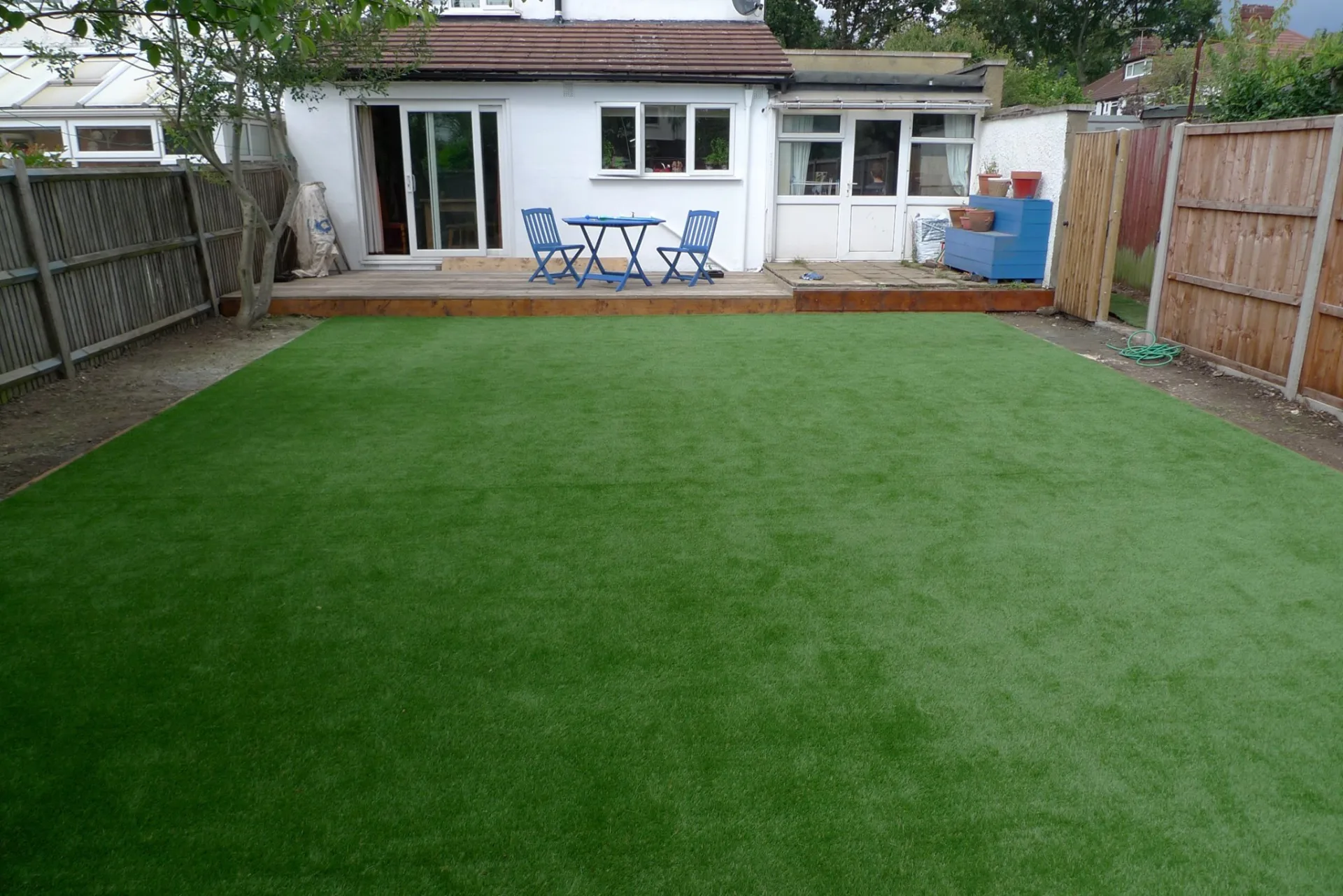
Artificial turf cost is not just the price of synthetic grass multiplied by your yard's square footage. A complete installed total can include removal, excavation, grading, drainage, compacted base material, turf, seams, edge restraint, infill, labor and cleanup. The surface area starts the calculation; the work below and around it determines whether two estimates are truly comparable.
That is especially important around Milton, where rainwater still needs a reliable path through and away from the finished area. Turf can replace a difficult natural lawn, pet area or worn side yard, but it should not be used to hide an existing low spot or runoff problem. Way's Lawn and Landscape LLC provides site-specific artificial turf installation for homeowners in the Milton service area.
Once you have a complete installed total, divide it by the finished square footage to create a comparison rate. That number is useful only when each estimate includes the same work. If one proposal leaves removal, base preparation or drainage as an open-ended extra, its apparent per-square-foot rate does not describe the same finished project.
Six details that change artificial turf cost
What must come out first
Existing sod, weeds, roots, concrete, old landscape fabric and unsuitable soil all affect excavation, disposal and labor.
Grade and water movement
Low areas or runoff toward the home may need correction before the base is built. Turf is permeable; it does not fix a poor drainage path by itself.
Base depth and preparation
The quantity of aggregate, compaction work and finish grading depend on the existing ground and how the turf area will be used.
Turf and infill selection
A front lawn, pet run and putting green need different performance. Fiber, backing, pile, infill and intended use affect material cost.
Shape, seams and borders
Curves, narrow strips, islands and disconnected areas create more cuts and waste than a simple rectangle of the same finished size.
Access and material handling
Narrow gates, fenced backyards and long carrying distances can add labor when equipment and bulk material cannot reach the work area directly.
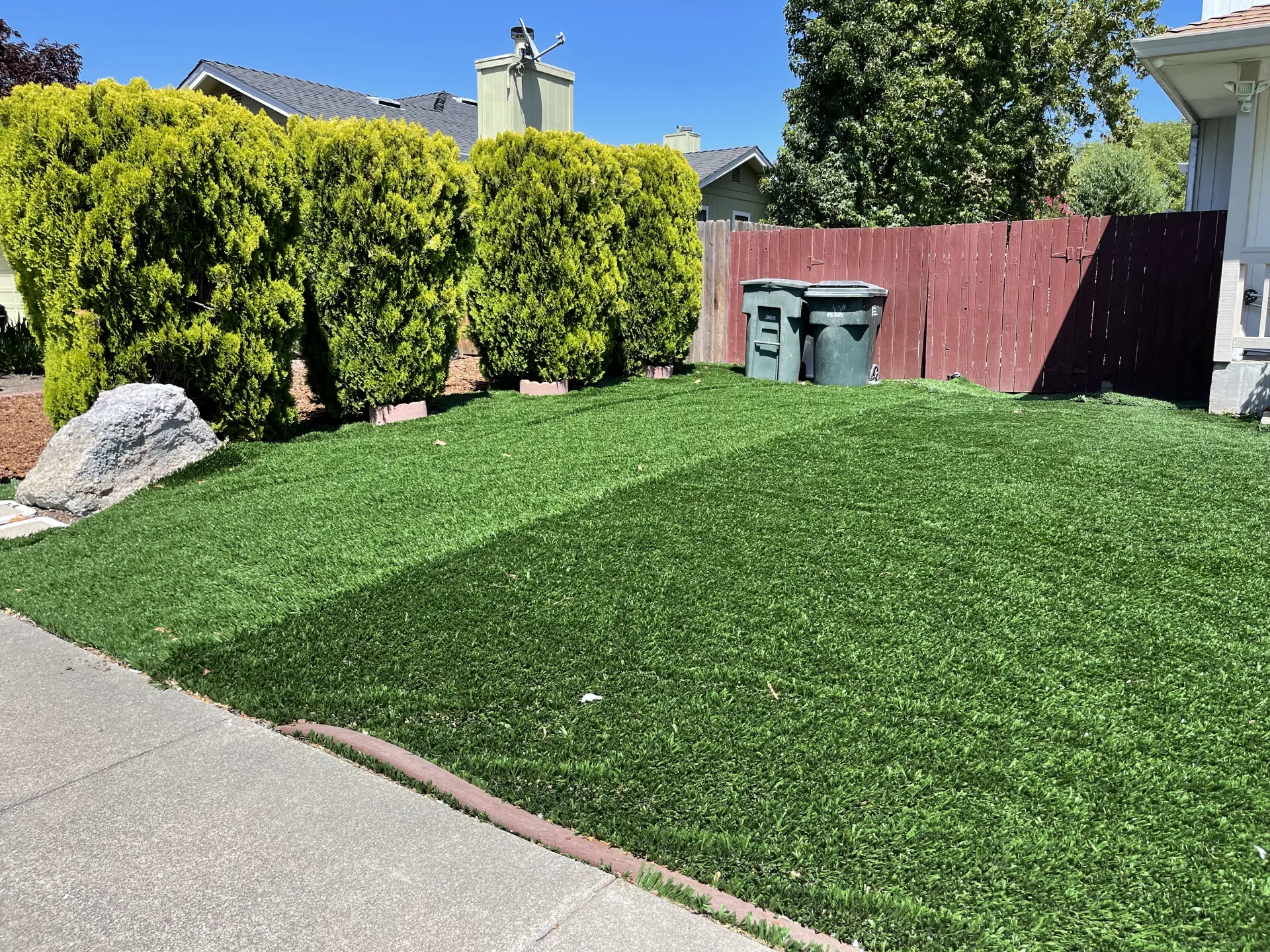
What 300, 500, 1,000 or 2,000 square feet tells you
Square footage is still the right place to begin. Measure only the surface that will receive turf, subtract patios and planting beds, and separate disconnected sections. Then ask how the installer accounts for cuts, seams and material waste.
To calculate a planning total, multiply the finished area by a contractor's complete installed rate, then add only the clearly excluded site work. Do not use a retail roll price as an installed rate. It does not account for the base, infill, seaming, edge work, equipment or labor that turns the product into a finished yard.
Drainage belongs in the budget conversation
Artificial turf has a permeable backing, but water still moves into the base and surrounding grade. Before installation, note where downspouts discharge, whether water stands after a storm, and where runoff can leave the yard. If the area already stays wet, include a drainage review instead of assuming a new surface will solve it.
This does not mean every turf project needs a separate drainage system. It means the estimate should explain how the existing grade, prepared base and discharge path work together. Correcting a problem before turf is secured is usually less disruptive than lifting a finished surface later.
Choose the product for the way you will use the yard
Material decisions should follow the use of the area. A landscape lawn prioritizes appearance and foot comfort. A pet area needs dependable drainage and a practical cleaning routine. A putting surface uses a shorter, denser system designed around ball roll rather than the look of a full lawn. Pool surrounds and play areas introduce their own priorities for texture, traffic and edges.
Ask for the proposed turf and infill by name, then discuss pile height, backing, drainage, surface temperature in direct sun and maintenance. The lowest material price is not automatically the lowest long-term cost if it is poorly matched to pets, heavy traffic or the amount of sun the area receives.
What a complete artificial turf estimate should include
A written scope makes the price understandable and protects both sides from comparing different assumptions. Look for:
- the measured finished area and how cuts or material waste are handled;
- the turf product, intended use and infill selection;
- removal, excavation, haul-off and disposal;
- grading, base type, base preparation and compaction;
- the drainage approach and any separate corrective work;
- seams, perimeter fastening, borders and transitions;
- access assumptions, cleanup and areas that will be disturbed; and
- basic care guidance plus the product and workmanship terms offered.
If you are also comparing natural grass, price the decisions separately. Sod installation generally has a lower initial scope but continues to need mowing, water and lawn care. Artificial turf shifts more of the expense to installation, then still needs debris removal, occasional brushing, rinsing in pet areas and periodic attention to infill or repairs. The right choice depends on the area, how you use it and which upkeep you would rather own.
Want a site-specific artificial turf price?
Tell Way's Lawn and Landscape LLC the approximate area, how you plan to use it, what surface is there now, how crews can reach it and whether water stands after rain. We can evaluate the yard and build an estimate around the complete installation.
Frequently Asked Questions
How much is 300 square feet of artificial turf?
Multiply the contractor's complete installed rate by 300, then add only the preparation or drainage work that is clearly excluded from that rate. Small areas can carry a higher per-square-foot cost because mobilization, delivery, equipment and seam work still have minimum costs. A site-specific estimate is needed for a reliable total.
How much is 500 square feet of artificial turf?
Use 500 finished square feet as the starting point, but ask whether the proposal includes the extra material needed for cuts and seams. Curves, narrow strips, several disconnected areas, removal and difficult access can change the total even when two projects have the same finished area.
How much is 1,000 square feet of artificial turf?
For a 1,000-square-foot project, compare complete installed totals rather than multiplying a turf-only product price. Confirm that excavation, disposal, grading, base material, compaction, turf, seams, edges, infill and cleanup are either included or separately priced.
How much does 2,000 square feet of artificial grass cost?
A 2,000-square-foot installation needs a measured plan and product selection before the total is dependable. More area can improve purchasing efficiency, but excavation volume, base depth, drainage work, access and the amount of seaming can outweigh that advantage. Request a written, site-specific scope.
What raises the cost of artificial turf installation?
Common cost drivers include removing the existing surface, correcting grade or drainage, moving material through limited access, building the base, selecting turf and infill for the intended use, creating curved edges, joining multiple seams and adding borders or transitions.
Is the lowest artificial turf estimate the best value?
Not necessarily. A lower proposal may exclude removal, haul-off, base preparation, drainage corrections, infill or finish work. Compare the measured area, product, preparation, drainage plan, seams, edges, cleanup and maintenance guidance before comparing totals.